
Holiday Guests and Open Doors: Keeping Dogs and Cats Safe from Slipping Out
Holiday Guests and Open Doors: Keeping Dogs and Cats Safe from Slipping Out
Holiday visitors mean open doors, new faces and extra noise, and a dog or cat may bolt. This pet escape holiday guests checklist gives you a calm plan for Thanksgiving, Thursday, November 26, 2026, and the gatherings after it.
Why the First Five Minutes Matter
The first five minutes of an arrival are the busiest part of any gathering. Guests carry coats, dishes and gifts, so few people watch the floor. The door stays open while everyone says hello. Excitement or fear can push a pet toward that opening.
The classic “dog slips out front door” moment takes only a few seconds. It often happens while hands are full. Cats can do the same, especially when strangers startle them.
Good lost dog prevention starts before the first guest knocks. A plan for the door, a quiet place for your pet and current ID can turn a scramble into a routine. The steps below are simple, and you can do most of them tonight.
A Pet Escape Holiday Guests Door Plan in Four Steps
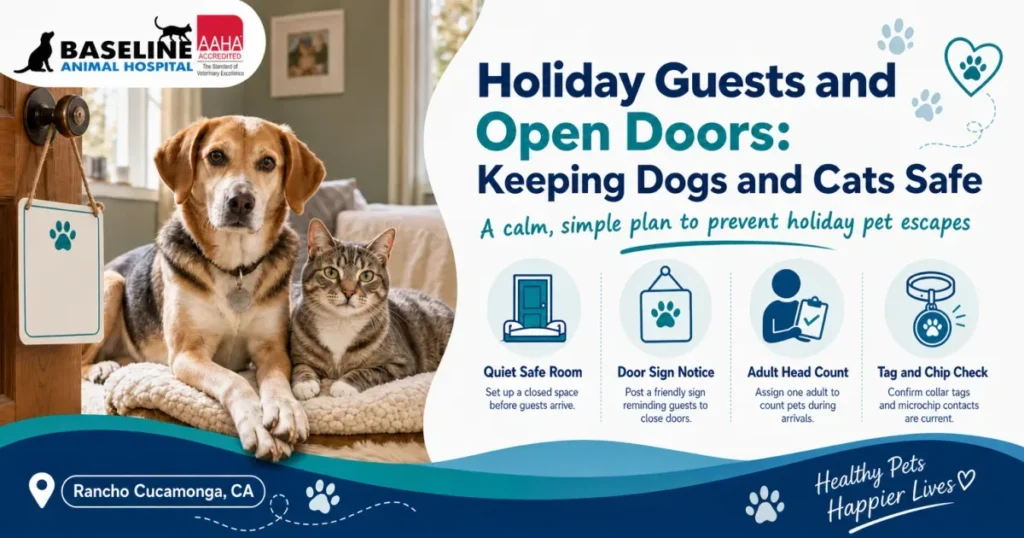
Use these four steps for every gathering. Each one gets a fuller explanation below, so this list stays short.
- Quiet room. Set up a closed room for your pet before the first guest arrives.
- Door sign. Post a sign asking guests to close the door behind them.
- Head count. Ask one adult to count pets, not just people, whenever the door opens.
- Tag and chip check. Confirm that the tag reads clearly and the chip registration has your current number.
Do the steps in order, because each one backs up the one before it.
A Quiet Room and a Door Sign
Setting up the room
Pick a room with a solid door, such as a bedroom or an office. Add fresh water, a comfortable bed and a chew or puzzle toy for your dog. For a cat, add a litter box and a hiding spot.
Next, walk the room and look for gaps. Check that the window latch holds, the screen sits tight, and the door closes fully. Move your pet in before guests arrive so that the room feels calm, not like a punishment.
If a big gathering still seems like too much for your pet, read Baseline’s Thanksgiving boarding guide for its booking timeline.
What to put on the sign and how to brief guests
Tape a sign at eye level on the front door and on any side gate. Keep it short: “Please close this door behind you. A pet lives here and may dart out.”
Brief guests before they arrive, because a quick text saves a scramble later. Ask them to knock or ring, wait for you, and shut the door right away. Tell children the rule too, since they often move fast.
Next, name one adult as the door person for the first half hour. That person counts pets whenever the door opens: dog in the room, cat in the room, nobody outside.
Gates and Yards After Windy Days
Latches, hinges and gaps to check by hand
Walk your fence line and test everything with your hands, not just your eyes. Pull and push each side gate to see whether the latch holds. Lift the gate slightly to test the hinges, and tighten any loose screws.
Check the bottom of the fence for gaps a small dog could squeeze through. Close and lock dog doors during gatherings, and make sure screen doors latch firmly. If your Rancho Cucamonga home has a side gate and a yard, make this check part of your holiday routine.
Why a yard check matters on windy days
Wind can shake a latch loose or swing a gate open. A latch that worked yesterday may not hold today. Check your gates again after a gusty day and just before guests arrive.
Also ask guests who use the side entrance to close the gate behind them, since a gate left ajar can look closed from a distance. Avoid leaving your pet alone in the yard while visitors come and go.
Tag, Chip and a Recent Photo
Even a strong pet escape holiday guests plan can fail on a busy night, so ID is your safety net.
What a tag does that a chip cannot
A tag gives a finder your phone number on the spot. Nobody needs a scanner or a trip to a clinic. Check that the tag text is clear, the ring is secure, and the number is one you answer.
Put the collar on before guests arrive, since a pet without it has no tag at all. Indoor cats count too, so ask your veterinarian which collar style suits your cat. If you also plan to take your dog out this season, this calm checklist for holiday outings with your dog covers tags and crowds.
What a microchip is and is not
A microchip is a tiny electronic device, about the size of a grain of rice. According to Baseline’s microchipping page, the chip goes under the skin between the shoulder blades, and the discomfort compares to a vaccination. Finders can bring a found pet to a local vet or shelter for a scan, and staff can call you if your information is current.
Ask your veterinarian what a chip can and cannot do. Baseline’s page says registering is the only way your information gets onto the chip, and an unregistered chip is worthless. Keep your registration details so you can update your phone number after a move or a new number.
Used together, a microchip and ID tag give a lost pet two ways home. Even so, a chip is a backup to the collar and tag, and it cannot promise a pet comes home.
A recent photo for your phone
Take two clear photos of each pet this week: one from the front and one from the side. Note any markings, such as a white paw or a torn ear. Save the photos in a favorites album, so you can share them in seconds.
Also write down your pet’s chip number and the registry’s contact details where the whole household can find them.
If Your Pet Gets Out: First Steps
Stay calm and start right away. A steady voice helps your pet come back. Ask guests to stay inside and help, so nobody leaves another door open.
- Look close first. Check the yard, the garage, under cars, porches and bushes, because a scared pet may hide nearby.
- Call your pet’s name in a calm, upbeat voice. Try not to chase, since running after a pet can push it farther away.
- Walk the block with a leash and treats. If your home borders open land near the San Gabriel foothills, include that edge in your walk.
- Ask neighbors to check garages and yards, and share your recent photo.
- Contact your local animal care center and nearby shelters. Ask how they take lost-pet reports, and check the city’s website for its process.
- Call the microchip registry with your pet’s chip number, and confirm your contact details.
- Post your photo in neighborhood groups, and keep searching even if the first hours pass quietly.
Cats often stay close to home, so search low and quiet spots before you widen the circle.
When to Call a Veterinarian
If your pet comes home with a limp, a wound or a dazed look, call Baseline Animal Hospital at (909) 987-4788 during business hours: Monday–Saturday, 8:00 AM–8:00 PM, closed Sunday. Please call rather than text. Holiday hours may differ, so confirm by phone.
Outside business hours, go to a local emergency veterinary hospital. Save its address and phone number in your phone before guests arrive. The American Veterinary Medical Association’s winter holiday pet safety page includes emergency planning tips.
If your pet is in distress, seek veterinary help immediately.
How Baseline Animal Hospital Can Help
Baseline’s microchipping page says to ask about microchipping at your next appointment. Ask the team how registration works and how to keep your contact details current.
A wellness exam is also a good time to ask about ID and holiday plans. Advice may vary with your pet’s age, health and habits, so call Baseline Animal Hospital at (909) 987-4788 with your questions.
Frequently Asked Questions About Pets Slipping Out During the Holidays
Is a microchip the same as a GPS tracker?
No. A microchip is a tiny device about the size of a grain of rice, and it holds an ID number rather than showing where your pet is. It does not track a pet that has slipped out. It works when a vet or shelter scans a found pet and the registered contact details lead back to you. Think of it as a backup to a collar and tag.
Does my pet’s chip need to be registered?
Yes. Baseline’s microchipping page says registering is the only way your details get linked to the chip, and an unregistered chip does little good. The page also says you receive paperwork on how to register. Keep it handy, then update your contact details after a move or a new phone number. Call Baseline Animal Hospital at (909) 987-4788 to ask a microchip question.
Should I put a collar and tag on an indoor cat?
Often, yes. Indoor cats can bolt when a door opens, and a tag gives a finder your number right away, without a scanner. Ask your veterinarian which collar style suits your cat, since fit and comfort matter. Keep a microchip as a backup, because a collar can come off. Recommendations may vary based on your cat’s age, health, and temperament.
What if my dog gets overexcited when the doorbell rings?
Plan ahead rather than hoping for calm. Settle your dog in the quiet room with a chew or puzzle toy before guests arrive, so the doorbell never meets an open path. You can also clip on a leash before opening the door. If the reaction is intense or new, your veterinarian can help determine what is behind it.
Can I ask guests to stay out of the pet’s room?
Yes, and it helps everyone. A closed door gives your pet a place to rest, and it keeps guests from opening a door by mistake. Put a short note on it, such as “Resting pet, please knock first.” Tell guests before they arrive, then remind them kindly. A clear, friendly request is usually all it takes.
Schedule Microchipping at Baseline Animal Hospital
A pet escape holiday guests plan comes down to four habits: a quiet room, a door sign, a head count and current ID. Thanksgiving is close, so this week is a good time to check your pet’s tag and chip details.
Call Baseline Animal Hospital at (909) 987-4788 or text the same number to schedule a visit or ask about microchipping. You can also use Baseline’s appointment page.
This article is for general educational purposes and is not a diagnosis. A veterinary exam is the safest way to understand your pet’s health and needs. Recommendations may vary based on your pet’s age, breed, health history, lifestyle, and exam findings. Tags and microchips improve the odds of a reunion, but they cannot promise a lost pet will be found. If your pet is in distress, seek veterinary help immediately.


Traveling for Thanksgiving with Your Pet: Car Trips, Health Certificates and Records
Traveling with pet health certificate this Thanksgiving? Get…
Dental Disease in Cats: Quiet Signs Owners Often Miss
Cat dental disease signs are easy for owners…
A Pet-Safe Thanksgiving Table: What to Share, What to Skip and Who to Call
Thanksgiving foods dogs can’t eat, plus what’s safe…
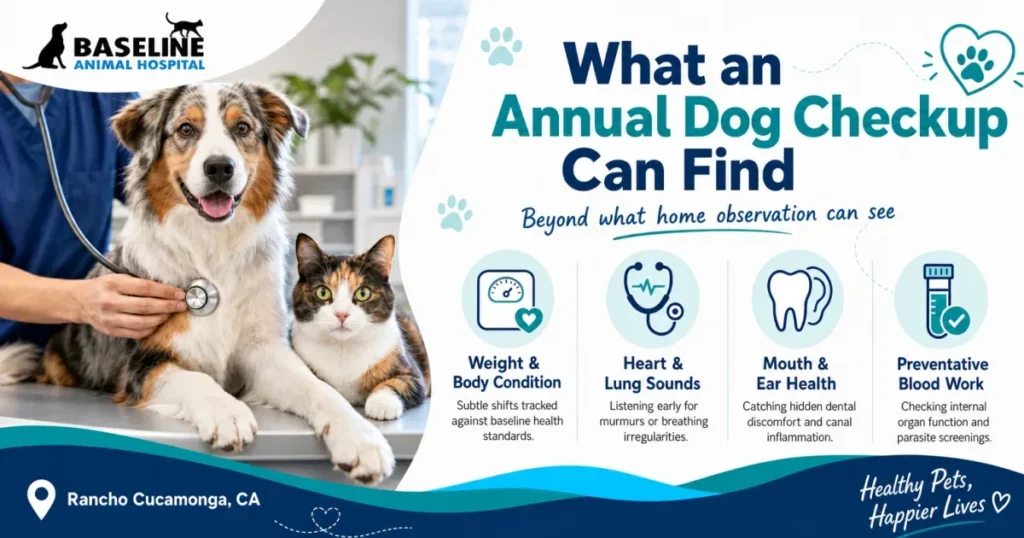
What a Yearly Checkup Can Find in a Healthy-Looking Dog
Wondering if your dog needs an annual dog…
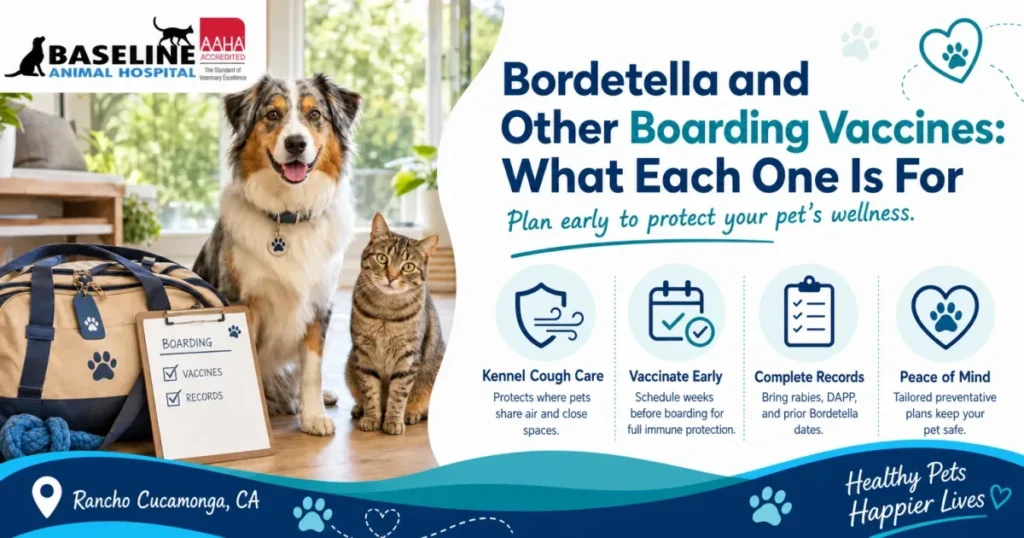
Bordetella and Other Boarding Vaccines: What Each One Is For
Learn what the bordetella vaccine does for boarding…
Traveling for Thanksgiving with Your Pet: Car Trips, Health Certificates and Records
Traveling with pet health certificate this Thanksgiving? Get a checklist…
Dental Disease in Cats: Quiet Signs Owners Often Miss
Cat dental disease signs are easy for owners to miss.…
A Pet-Safe Thanksgiving Table: What to Share, What to Skip and Who to Call
Thanksgiving foods dogs can’t eat, plus what’s safe to share…