
Dental Disease in Cats: Quiet Signs Owners Often Miss
Dental Disease in Cats: Quiet Signs Owners Often Miss
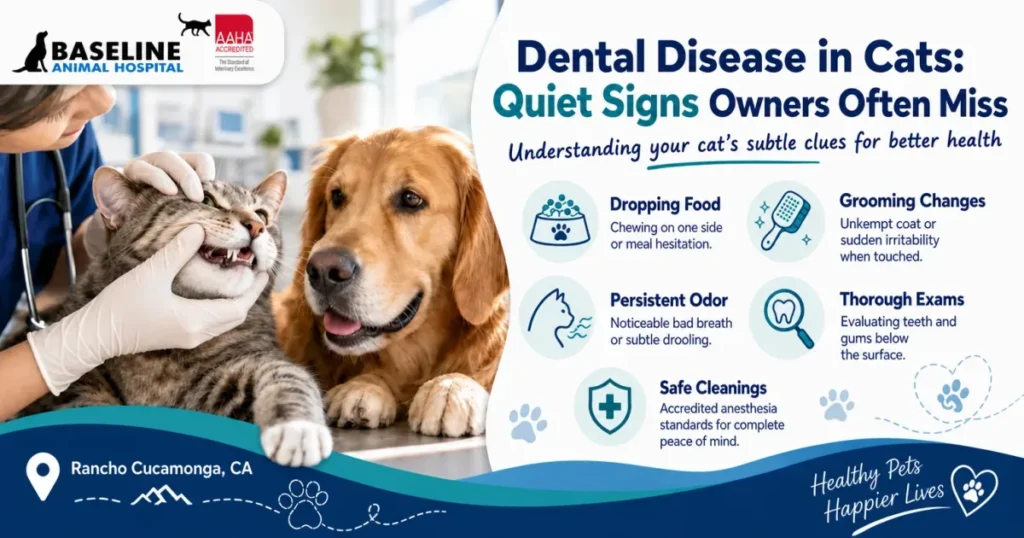
Cats rarely cry out when their mouths hurt. They change small habits instead, so cat dental disease signs are easy to miss. You might see dropped food, less grooming, or a new smell on your cat’s breath.
Cat Dental Disease Signs: The Short Answer
The short answer is to watch for changes, not complaints. A cat with a sore mouth may still eat, purr and play. The clues show up in how your cat eats, grooms and acts, and in how the breath smells. Any one sign can have other causes, so none points to a single condition. A veterinary exam is the safest way to understand a change, and regular checks matter because mouth problems can also hide in cats that seem fine.
Why Cats Hide Mouth Discomfort
Hiding discomfort is an old cat habit. A cat that looks weak can seem like easy prey, so many cats hide pain even at home.
That is why the signs are small. You may see a cat that still comes to dinner but eats a little differently, rather than crying or pawing at the mouth.
Changes also build slowly. A cat that eats a bit more carefully each week can look normal day to day. Adult and senior cats deserve extra attention, because mouth changes can build over years.
A short note helps. Jot down the date you first saw a change. Your vet can use those dates during the exam.
Quiet Signs Your Cat’s Mouth May Hurt
Look for patterns over several days, not one odd meal. Baseline’s guide to subtle changes in senior cats explains what to track at home, and the same habit works for mouth changes.
Chewing on One Side or Dropping Food
Watch how your cat eats. A cat with a sore mouth may chew on one side, tilt the head, or let kibble fall from the lips. Some cats skip dry food but still take wet food. Others swallow bites whole or walk away from the bowl after a few mouthfuls. Weight can also drift down over weeks. Note any change in appetite and mention it at the next visit.
Less Grooming and Changes in Mood
Grooming takes a comfortable mouth. A cat that licks less may look scruffy, with a dull or matted coat, especially along the back. Mood can shift too. Your cat may hide more, avoid petting near the face, or hiss when you reach for the head. Play may fade. These changes can come from many causes, such as joint pain or illness, so an exam matters before anyone guesses.
Bad Breath and Drooling
A faint odor after a fishy meal is ordinary. A strong, lasting smell is different. Cat drooling, bad breath, or both can point to the mouth, but they can also come from illness elsewhere, so ask your vet. Look for drool on bedding or a wet chin. Red or swollen gums and brown buildup on the teeth also deserve a look. Skip scraping at tartar yourself, and ask your vet about safer options.
What Your Vet Looks at During a Dental Exam
A dental exam starts with the whole cat. Your vet checks weight and coat, then looks inside the mouth. A routine wellness exam is a good time to ask about teeth. Ask the team what a dental exam at Baseline covers.
Your vet may check gum color, tartar, loose or broken teeth, swelling, and how the jaw moves. An awake cat often limits what the vet can see. Some problems sit below the gum line or inside a tooth, so signs of dental disease in cats can hide from view. Ask the team whether dental X-rays are part of a cat dental visit at Baseline.
What a Cat Dental Cleaning Involves
A cleaning is a planned procedure, not a quick scrape. It aims to remove plaque and tartar from the teeth and below the gum line. A cat dental cleaning often follows steps like these, and the team can explain which ones apply to your cat:
- Exam and history, where you describe what you have noticed at home.
- A pre-procedure check, which may include bloodwork.
- Anesthesia, with monitoring while your cat sleeps.
- Cleaning above and below the gum line, plus X-rays if the vet recommends them.
- Recovery and home instructions, including when to schedule a recheck.
Ask the team which of these steps apply at Baseline.
Why Anesthesia Is Used, in Plain Words
Anesthesia means your cat is fully asleep and comfortable. Most cats will not hold still while someone cleans under the gum line or takes X-rays. Sleep also lets the vet work thoroughly and protect the airway. A cleaning that skips the area below the gum line may make teeth look better without treating what sits underneath.
Monitoring means the team tracks heart rate, breathing and temperature while your cat sleeps. Your vet may suggest bloodwork first, and your cat’s age and health history can shape that advice. Ask the team how Baseline checks each cat before anesthesia and what monitoring looks like. It is fair to feel nervous, and good questions help.
Questions to Ask About a Dental Estimate
A dental estimate should be easy to read. Baseline’s dog dental cleaning guide explains what a dental estimate may include, from anesthesia and monitoring to bloodwork, X-rays and extractions, which means tooth removal. It is written for dogs, but the same questions carry over to cats.
- Does the estimate cover anesthesia and monitoring?
- Does it include pre-procedure bloodwork?
- Do dental X-rays come with the plan, or only if needed?
- What happens if the vet finds a tooth that needs removal, and who calls you first?
- Does the plan include pain relief and a recheck?
- What can change the plan on the day?
Ask for these answers before the procedure, so you know what to expect.
Home Care a Veterinarian Can Show You
Brushing, rinses and chews suit some cats, but none fits every cat. Baseline’s dental page mentions home-care options for pets in general terms. The safest start is to ask your vet to show you how to handle your cat’s mouth, how fast to go, and what healthy gums look like.
Go slowly, stop if your cat panics, and never force the mouth open. Home care supports a dental exam. It does not replace one.
When to Call a Veterinarian
Book a visit soon if your cat eats less, chews on one side, drools more, or has lasting bad breath.
Seek veterinary help immediately if you see any of these:
- Swelling on the face or under an eye
- Bleeding from the mouth
- A cat that stops eating or drinking
- A mouth that will not close, or sudden heavy drooling
- Pawing at the mouth with obvious distress
If your cat is in distress, seek veterinary help immediately.
For sudden or severe symptoms, call Baseline Animal Hospital at (909) 987-4788 during posted business hours. Outside those hours, go to a local emergency veterinary hospital. Please call rather than text.
How Baseline Animal Hospital Can Help
For pet dental care in Rancho Cucamonga, ask the team how often your cat needs an oral exam and cleaning. Cats often hide pain, so regular checks matter even when your cat seems fine. To set up an oral exam, call Baseline Animal Hospital at (909) 987-4788.
Think of the team as a partner in your cat’s comfort. You can describe what you have noticed, ask what the exam covers, and ask how anesthesia, monitoring and X-rays work for cats. Regular preventative care can also give you peace of mind and protect your cat’s quality of life.
Frequently Asked Questions About Cat Dental Disease
Can a cat have a sore mouth and still eat normally?
Yes. Many cats keep eating even when the mouth hurts, because hunger and routine are strong. You may only notice small shifts, such as chewing on one side, dropping a few pieces, or choosing softer food. Normal eating does not rule out a problem, and only an exam can show what is going on in the mouth. If you have noticed any of these changes, mention them at the next visit.
Is bad breath normal in cats?
A faint smell after a meal can be ordinary. Strong or lasting odor is different, and it can come from the mouth or from illness elsewhere in the body. Because you cannot tell which from the outside, a veterinary exam is the safest way to understand the cause. Note when the smell started and whether your cat is also drooling, eating less or grooming less, then share those details with your vet.
Why does my cat need anesthesia for a dental cleaning?
Anesthesia keeps your cat asleep, comfortable and still. That lets the vet examine every tooth and clean beneath the gums, which an awake cat rarely allows. Any anesthesia carries some risk, so your vet tailors the plan to your cat’s age, health history and exam findings. Ask how the team monitors your cat. To talk it through, call Baseline Animal Hospital at (909) 987-4788.
Can I check my cat’s teeth at home?
You can look when your cat feels calm and willing. Notice breath, gum color, tartar and how your cat eats. Never force the mouth open, and stop if your cat pulls away. A home look cannot see below the gum line or inside the tooth, so it does not replace an exam. Ask your vet to show you a safe way to check and what is normal for your cat.
How often should a cat’s teeth be checked?
Baseline’s dental page recommends a yearly oral exam and regular cleanings for all pets. Your cat may need checks more often if you notice changes, or if your vet has found early tartar or gum redness. Senior cats often benefit from closer attention. Recommendations vary with age, health history and exam findings. To set a schedule, call Baseline at (909) 987-4788.
Schedule a Cat Dental Exam at Baseline Animal Hospital
If you have noticed cat dental disease signs, a dental exam is a calm next step. Your vet can look at the mouth, talk through what you have seen, and explain your options for your cat’s age and health. Book a dental exam or call Baseline Animal Hospital at (909) 987-4788.
For sudden or severe symptoms, call right away instead of texting.
This article is for general educational purposes and is not a diagnosis. A veterinary exam is the safest way to understand why your cat’s eating, grooming or breath has changed. Recommendations may vary based on your cat’s age, health history, lifestyle, and exam findings. If your pet is in distress, seek veterinary help immediately.


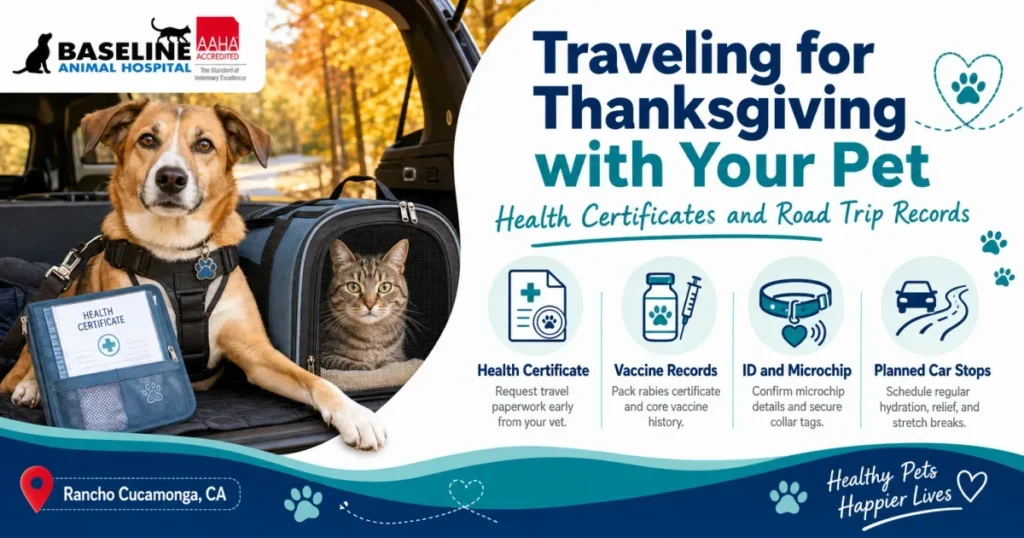
Traveling for Thanksgiving with Your Pet: Car Trips, Health Certificates and Records
Traveling with pet health certificate this Thanksgiving? Get…
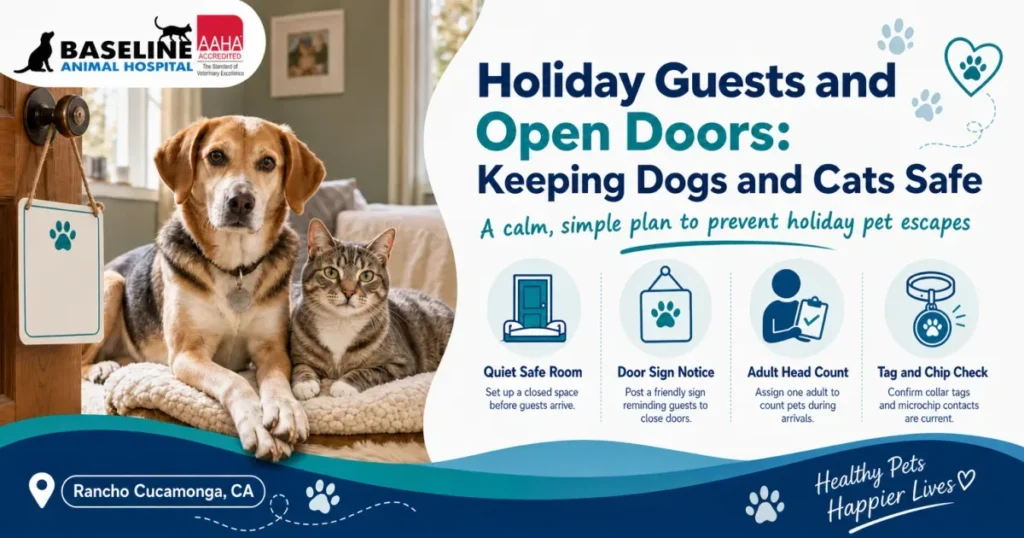
Holiday Guests and Open Doors: Keeping Dogs and Cats Safe from Slipping Out
Get a calm, simple pet escape holiday guests…
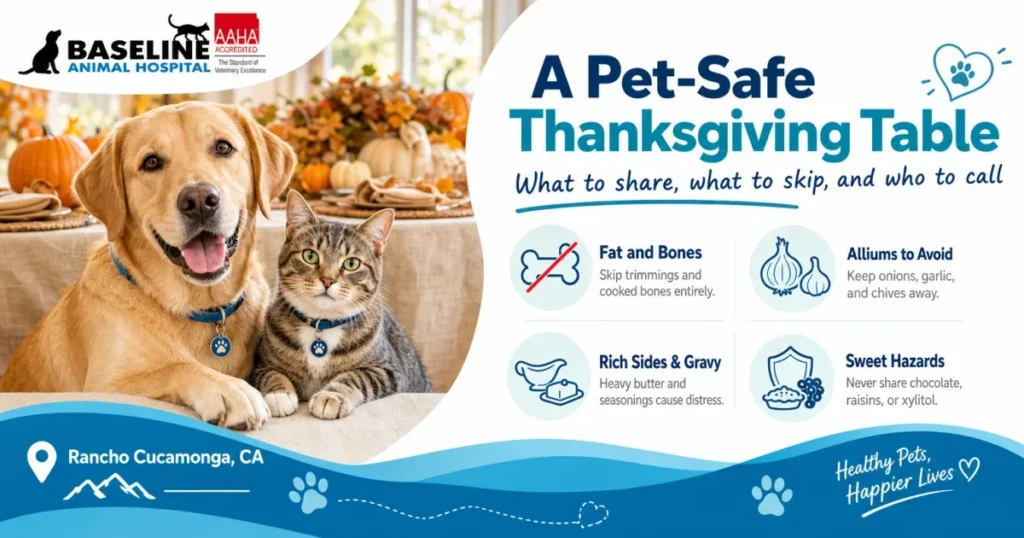
A Pet-Safe Thanksgiving Table: What to Share, What to Skip and Who to Call
Thanksgiving foods dogs can’t eat, plus what’s safe…
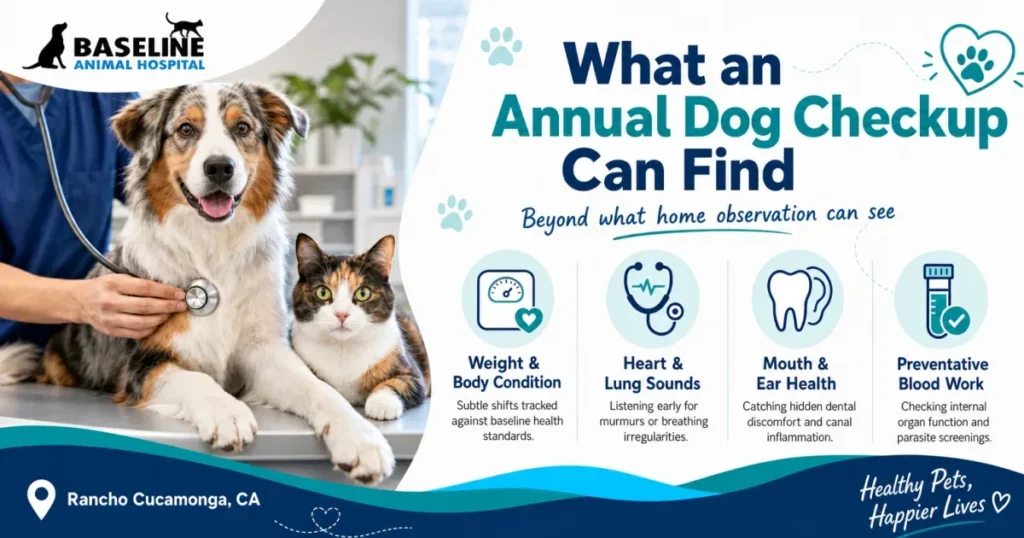
What a Yearly Checkup Can Find in a Healthy-Looking Dog
Wondering if your dog needs an annual dog…

Bordetella and Other Boarding Vaccines: What Each One Is For
Learn what the bordetella vaccine does for boarding…
Traveling for Thanksgiving with Your Pet: Car Trips, Health Certificates and Records
Traveling with pet health certificate this Thanksgiving? Get a checklist…
Holiday Guests and Open Doors: Keeping Dogs and Cats Safe from Slipping Out
Get a calm, simple pet escape holiday guests checklist for…
A Pet-Safe Thanksgiving Table: What to Share, What to Skip and Who to Call
Thanksgiving foods dogs can’t eat, plus what’s safe to share…