What a Yearly Checkup Can Find in a Healthy-Looking Dog
What a Yearly Checkup Can Find in a Healthy-Looking Dog
Your dog eats well, plays hard and greets you at the door. So does an annual dog checkup still matter? We think it does, because quiet changes can hide behind a wagging tail. A healthy-looking dog can still need a hands-on exam to catch small shifts. At Baseline Animal Hospital in Rancho Cucamonga, we partner with families in Alta Loma, Ontario and nearby. This guide covers a wellness exam at Baseline, what your veterinarian checks, and how to prepare. Still, a veterinary exam is the safest way to understand your dog’s health. Online reading, however, cannot replace it.
Why “Looks Fine” Isn’t the Full Picture
Dogs hide discomfort
Dogs do not complain the way people do. Many keep wagging through mild discomfort, because that is how they cope. Instinct plays a part too. Dogs often act normal until a problem grows. That does not mean you missed anything. It simply reflects how dogs behave. Small shifts in weight, comfort or energy can pass unnoticed at home, since you see your dog every day. Slow changes blend into the routine. A fresh set of trained hands, however, can notice what daily life hides.
What a yearly visit adds that home observation can’t
Home care matters, and you know your dog best. Still, a yearly visit adds tools you do not have at home. Your veterinarian can help determine what is normal for your dog’s age and breed. The team also records weight and vital signs, so each visit builds on the last. Over time, those records show trends. For example, a slow weight change is easy to miss day to day but clear on a chart. An annual dog checkup also supports preventative care. Vaccines, parasite prevention and diet advice often come up in the same visit. Recommendations may vary based on your dog’s age, breed, health history, lifestyle, and exam findings.
What the Vet Checks During an Annual Dog Checkup, Head to Tail
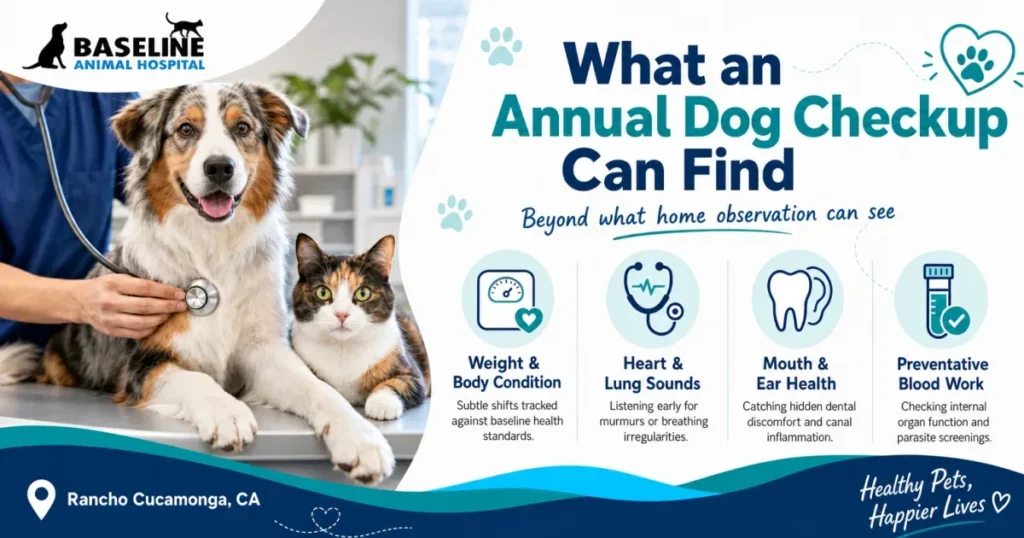
The visit starts with a technician. They weigh your dog and check temperature, heart rate and breathing rate. The team also asks about behavior, appetite and activity. Then the veterinarian completes a head-to-tail exam. Here is a quick look at what that covers during an annual dog checkup.
Quick reference table: body area, what the vet looks or listens for, why it matters
| Body area | What the vet looks or listens for | Why it matters |
|---|---|---|
| Weight and body shape | Weight trend, plus the feel of ribs, waist and muscle | Steady weight supports comfort and quality of life |
| Mouth and teeth | Gums, tartar, loose or broken teeth | Mouth discomfort often goes unnoticed at home |
| Ears and eyes | Redness, discharge, clarity, squinting | Early notice gives you more options |
| Skin, coat and lumps | Dryness, hair loss, new lumps | Only an exam can tell lumps apart |
| Heart and lungs | Heart rate, rhythm, breathing sounds | Gives a starting point to compare against later |
| Belly and joints | Gentle pressing, comfort, range of motion | Helps the vet notice tenderness or stiffness |
| Gait and reflexes | Walking, stance, nails and paws | Shows how comfortably your dog moves |
Weight and Body Condition
Weight is one of the simplest health signals. Your veterinarian also looks at body condition, which means how lean or padded your dog feels under the coat. To judge this, the vet usually feels along the ribs, spine and waist. Vets call that hands-on step palpating. It simply means pressing gently with the hands, so there is nothing to worry about. Thick coats can hide extra pounds or lost muscle, so the scale alone does not tell the whole story. Ideal shape also varies by breed. A greyhound and a bulldog look very different, yet both can have a healthy weight. Your vet can tailor advice on food and activity to support your dog’s quality of life. Leashed walks on the Pacific Electric Trail can fit that plan. So can a visit to The Bark at Central Park, depending on your dog.
Mouth, Ears, Skin, and Lumps
The vet checks the teeth and gums first. Dental trouble can still hide behind a happy face. Baseline’s dental page recommends a yearly oral exam, so your vet can explain whether a cleaning makes sense. Next come the ears, where redness or odor may point to a problem. The vet also looks over the skin and coat for dryness, hair loss and parasites. Then the vet runs both hands over the body to feel for lumps. Lumps come in many types, so only an exam can tell them apart. You can help between visits. For example, try a simple monthly home check for lumps and bumps, and note anything new. Bring those notes to the exam, because details help. Your veterinarian can help determine what needs a closer look.
Heart and Lungs
Next, the vet listens to the chest with a stethoscope. Vets call this step auscultation, which simply means listening. Meanwhile, the vet notes your dog’s heart rate, rhythm and breathing sounds. Because dogs differ, the vet compares those sounds with what is typical for your dog’s age and size. However, a sound that differs from normal may lead your vet to suggest more testing. Many dogs show no change at all, and that is good news too. Either way, the notes also give you a starting point for your next annual exam.
Eyes, Belly, Joints, and Movement
The vet checks the eyes for clarity, redness and discharge. Then the vet gently presses on the belly, which is also palpating. This helps the vet feel for tenderness or anything unusual, especially when a dog stays quiet. After that, the vet moves each leg and checks the joints. Finally, the vet watches your dog walk and stand. Gait, which means the way a dog moves, can also show stiffness. Owners often explain stiffness away as slowing down, so a trained eye helps. Nails, paws and reflexes get a look too. Each yearly visit adds another point of comparison.
Blood Work and Parasite Tests: When They Come Up
Not every annual dog checkup includes lab tests. Instead, your vet suggests them based on your dog’s needs. Baseline’s wellness page says your vet may recommend tests depending on age, breed and health status. Of course, you can ask questions first.
When blood work may be suggested (age, health history, before dental work)
Blood work means a lab reviews a small blood sample. It can screen for conditions such as anemia, which means a low red blood cell count. It can also check for changes in organ function. Your vet may suggest it for a few reasons. For example, age, health history or an upcoming dental cleaning can all play a part. Tests on a healthy dog also create baseline values. Later results then have something to compare against as your dog ages. Read more about why vets may suggest bloodwork and X-rays. Still, blood work is an option your vet discusses with you, not an automatic step.
Heartworm and fecal tests, and how they tie to prevention
Mosquito bites pass heartworm to dogs. Heartworm screening also uses a small blood sample. A fecal test, meanwhile, checks a stool sample for intestinal parasites. Your vet may suggest either one, depending on your dog’s age, lifestyle and history. The results then help shape the prevention plan. Baseline’s heartworm page cites the American Heartworm Society’s recommendation of year-round prevention. Preventives are prescription-only, so your vet needs to discuss the right option with you. Learn more about flea, tick, and heartworm prevention before your visit. Product choices belong in that conversation, not in an online article.
Preparing Your Questions
A little prep also makes your annual dog checkup smoother. Our guide on what to bring and what to expect covers the basics, so start there. Below, you will find a checklist and some questions to tailor to your dog.
Checklist: what to note and bring
Collect these items a few days ahead, so you arrive prepared.
- Vaccine and medical records, especially if your dog saw another clinic
- A list of medications and supplements your dog takes
- Notes on appetite, thirst and energy, since small changes add up
- Notes on bathroom habits, such as stool changes
- Daily routines, for example walks, hikes or dog park visits
- Photos or short videos of anything you have noticed, such as a cough or a limp
- Your questions, written down before you arrive
A yearly visit does not replace care between exams. If your dog is in distress, seek veterinary help immediately. Call Baseline during business hours, or contact a local emergency veterinary hospital after hours.
Questions worth asking your vet
Every dog is different, so tailor these to your own dog. They make good starting points.
- Is my dog at a healthy weight, and what would you change?
- How do my dog’s teeth and gums look, and when should we plan a dental check?
- Does my dog’s age or breed call for blood work or other tests this year?
- Which parasite prevention fits my dog’s lifestyle?
- What should I watch for at home before the next visit?
- How often should we plan checkups from here?
Your veterinarian can help determine the right plan, so no question is too small.
Frequently Asked Questions
Does a healthy-looking dog really need an annual dog checkup?
Yes, in most cases. Dogs often hide mild discomfort. So a dog that seems fine at home can still have changes that only an exam picks up. An annual dog checkup also builds records your vet can compare over time. Recommendations may vary based on your dog’s age, breed, health history, lifestyle, and exam findings. Not sure where your dog stands? Call or text us at (909) 987-4788, and we will help you plan.
How often should my dog have a yearly vet exam?
Baseline’s wellness page says healthy adult dogs typically need one exam each year. Senior dogs may benefit from visits twice a year or more often. Puppies usually need more frequent visits for vaccines and growth checks. Your veterinarian can help determine when your dog enters the senior years, since that varies. Wondering when your dog’s next visit should be? Call or text us at (909) 987-4788, or stop by and ask in person.
What happens during a dog wellness exam?
A technician weighs your dog and checks temperature, heart rate and breathing rate. Then the veterinarian examines your dog from head to tail. That covers the heart, lungs, eyes, ears, teeth, skin, belly, paws and movement. You can ask questions throughout. Vaccines and parasite prevention often come up too. Curious what your dog’s visit will look like? Call or text us at (909) 987-4788, and we will walk you through it.
Will my dog need blood work at every visit?
Not necessarily. Your veterinarian may suggest blood work, a heartworm screen or a fecal test. The choice depends on your dog’s age, breed, health history and lifestyle. Some visits include lab tests, and some do not. Your vet discusses the options with you first, so you can ask why a test helps. Have a question about testing? Text or call us at (909) 987-4788, and we will explain.
How do I book a pet checkup near me in Rancho Cucamonga?
You can book with Baseline Animal Hospital at 9760 Base Line Rd #100 in Rancho Cucamonga. We welcome dogs from Alta Loma, Ontario and nearby. Cooler fall weather and the weeks before the holidays are a practical time to schedule a visit. Please confirm current hours and openings with our team. Ready to set a time? Call or text us at (909) 987-4788.
Book Your Dog’s Wellness Exam in Rancho Cucamonga
A healthy-looking dog can still benefit from an annual dog checkup. It gives you peace of mind, a record to compare against, and a chance to ask questions. We partner with families across Rancho Cucamonga, Alta Loma and Ontario to tailor preventative care for each dog. Thanksgiving is close, so now is a good time to ask about openings. Please confirm current hours with our team. You can book an appointment online. You can also call or text us at (909) 987-4788. Our address is 9760 Base Line Rd #100, Rancho Cucamonga, CA 91701. This article is educational, and it does not replace an in-person exam.
Ready to schedule your dog’s checkup?
Call or text us at (909) 987-4788, and we will help you find a time.
This article is for general educational purposes and is not a diagnosis. A veterinary exam is the safest way to understand your dog’s health, and online information does not replace an in-person exam. Recommendations may vary based on your dog’s age, breed, health history, lifestyle, and exam findings. Your veterinarian can help determine which tests and prevention fit your dog. If your dog is in distress, seek veterinary help immediately.


Traveling for Thanksgiving with Your Pet: Car Trips, Health Certificates and Records
Traveling with pet health certificate this Thanksgiving? Get…
Dental Disease in Cats: Quiet Signs Owners Often Miss
Cat dental disease signs are easy for owners…
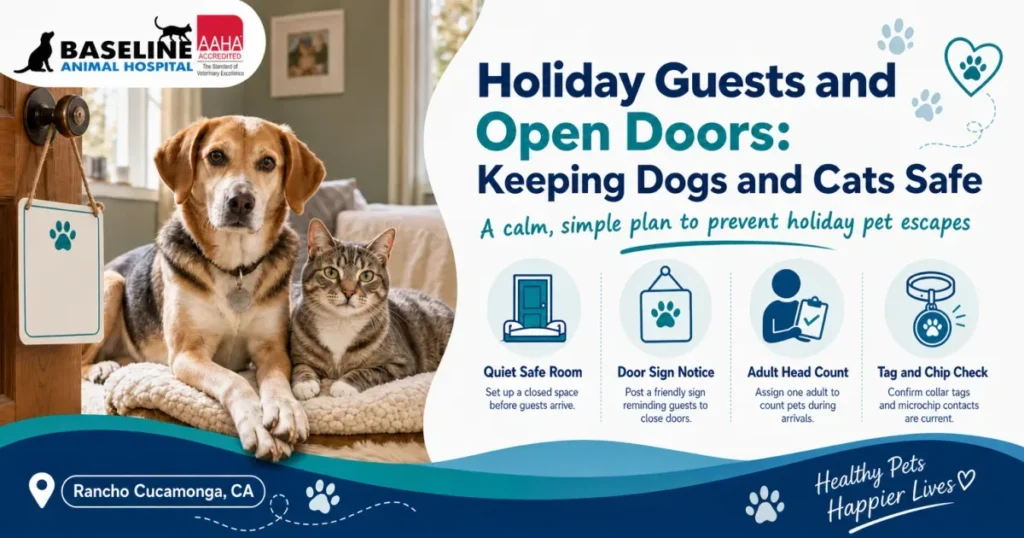
Holiday Guests and Open Doors: Keeping Dogs and Cats Safe from Slipping Out
Get a calm, simple pet escape holiday guests…
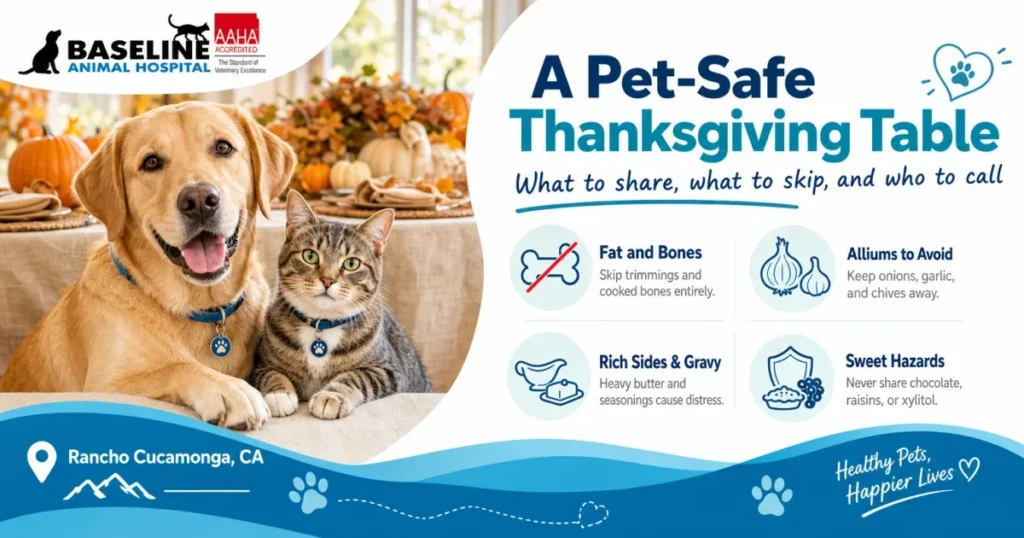
A Pet-Safe Thanksgiving Table: What to Share, What to Skip and Who to Call
Thanksgiving foods dogs can’t eat, plus what’s safe…

Bordetella and Other Boarding Vaccines: What Each One Is For
Learn what the bordetella vaccine does for boarding…
Traveling for Thanksgiving with Your Pet: Car Trips, Health Certificates and Records
Traveling with pet health certificate this Thanksgiving? Get a checklist…
Dental Disease in Cats: Quiet Signs Owners Often Miss
Cat dental disease signs are easy for owners to miss.…
Holiday Guests and Open Doors: Keeping Dogs and Cats Safe from Slipping Out
Get a calm, simple pet escape holiday guests checklist for…