
Lumps and Bumps on Dogs and Cats: A Monthly Home Check and When to Book an Exam
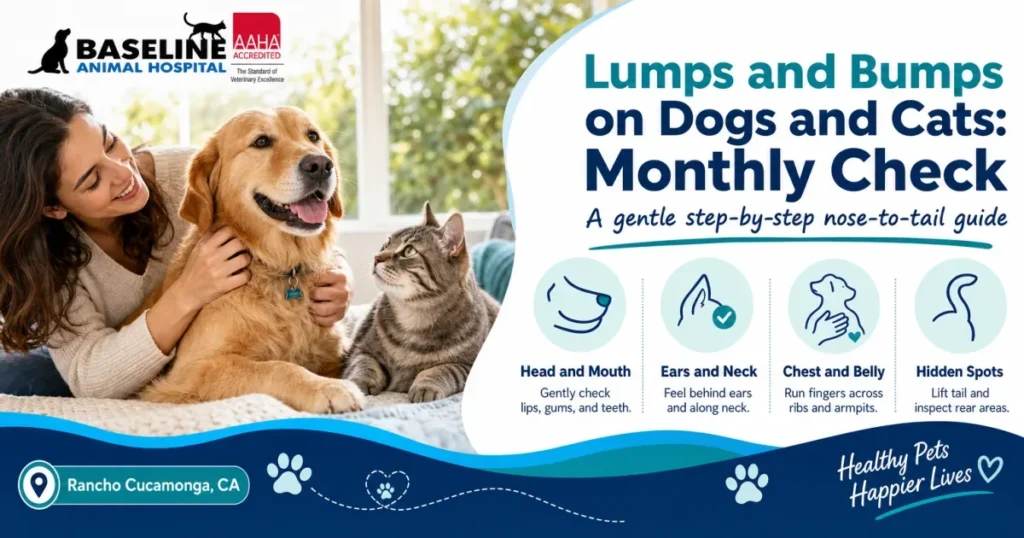
Lumps and Bumps on Dogs and Cats: A Monthly Home Check and When to Book an Exam
Finding a new bump on your pet can stop you in your tracks. If you typed ‘lump on dog when to see vet’ into a search bar, you are not alone. We hear this worry often from families in Rancho Cucamonga, Alta Loma, and Ontario. The good news is that most lumps are not serious. Still, only an exam can tell them apart. This guide shows you a calm monthly home check for dogs and cats. It also shows you how to track changes and when to book a visit. Please remember that a home check supports your vet’s exam. It never replaces one.
Why November Is a Good Month to Check Your Pet for Lumps
November gives us a helpful reminder. The American Veterinary Medical Association lists National Pet Cancer Awareness Month among its November 2026 awareness events. Many owners start searching lump on dog when to see vet this month. A few quiet minutes of touch can answer a lot. We see the month as a gentle nudge, not a reason to worry.
What Pet Cancer Awareness Month asks of owners
The month asks one simple thing of owners. Learn what is normal for your pet’s body, and speak up when something changes. You do not need special skills. Once you know your pet’s normal, a new lump stands out quickly. Then you can call us early. Acting early gives your vet more to work with. We cannot promise any outcome, but a quick call is always a kind choice.
A simple monthly habit
Pick a date you will remember, such as the first Saturday of each month. Then pair the check with a calm moment. A walk on the Pacific Electric Trail or time at The Bark at Central Park can put your dog in a relaxed mood. Cuddle time on the couch works well for cats. Senior pets deserve extra attention. Pets reach their senior years around 6 to 7 and up, depending on the pet. Our senior pet exams look closely at changes like new lumps. Your vet can tailor a schedule to your pet’s age and health.
How to Do a Nose-to-Tail Check at Home
A nose-to-tail check takes about five minutes. Go slowly, and let your pet set the pace. Your goal is simple: learn what feels normal, so you notice what is new.
Before you start: a calm setup and what you need
Choose a quiet room with good light. Keep treats close and move slowly. Gather a soft cloth, a notebook or phone, and a ruler or coin. Start when your pet feels calm, not right after play. If your pet pulls away or seems sore, stop and try again later. Never force a check. Short, happy sessions work best.
Checking your dog, step by step
Work from nose to tail with flat fingers and gentle pressure. Use the same order every month. That way, you will notice changes faster.
- Head and mouth: Lift the lips and look at the gums and teeth. Then feel around the eyes, cheeks, and under the jaw.
- Ears and neck: Check inside and behind each ear. Next, run your hands along the neck and collar area.
- Chest and belly: Feel the chest and armpits. Then stroke the belly gently, including the groin.
- Back and legs: Walk your fingers down the spine. Feel each leg from top to bottom, and look between the toes.
- Hidden spots: Lift the tail and look around the rear end. For male dogs, check the testicles too.
Thick coats can hide small bumps, so part the fur as you go. Parasites can also hide in the coat. Ask us about flea and tick prevention to help keep your dog comfortable. Write down anything new in your lump log, which we cover below.
Checking your cat, step by step
Cats hide discomfort well, so go slowly. Let your cat sniff your hand first. Many cats love chin rubs, so start there.
- Head and face: Check the chin, lips, and around the eyes. Look at the gums if your cat allows it.
- Ears and neck: Feel behind the ears and along the neck. Look under the collar if your cat wears one.
- Chest and belly: Stroke the chest, then the belly. Notice any spot where your cat flinches.
- Back and sides: Run your hand along the spine and ribs. Many cats hold still for this part.
- Legs, paws, and tail: Feel each leg and between the toes. Finish at the base of the tail.
A new lump on cat skin always deserves a prompt exam, even if your cat acts like herself. Older cats need extra care. Our senior cat checkup guide explains subtle changes that owners often notice late.
What a home check can and cannot tell you
A home check can tell you what is new. It shows you where a lump sits and how it changes over time. It cannot tell you what a lump is. Size, softness, color, and movement do not reveal the answer, even to experienced owners. Only a veterinary exam can do that. So use your check to notice, record, and call us. It supports your vet’s exam and never replaces it.
Keeping a Lump Log: What to Write Down and Photograph
Overall, a written log turns a vague worry into clear facts. When you wonder about lump on dog when to see vet, your notes also let your vet see how the bump has changed. Instead of relying on memory, keep the log in a notebook or on your phone.
Lump log table: date, location, size, how it feels to you, photo, other changes
Copy this table and add a row each time you check. Fill it in with your own words.
| Date | Location | Size | How it feels to you | Photo | Other changes |
|---|---|---|---|---|---|
| Nov 5 | Right hind leg, outer thigh | Width in cm or inches, measured with a ruler | Describe it in your own words | Photo 1, ruler beside it | Eating, energy, limping |
| Dec 5 | Same spot | Measure again and compare | Note anything different | Photo 2, same light and angle | Write ‘none’ if all normal |
You do not need medical terms. You also do not need to guess what a lump is. Just record what you see, then add any other changes, such as eating, energy, or limping. Never squeeze, pop, or try to remove a lump at home.
Photo tips: a coin or ruler for scale, same lighting, same angle
Place a coin or ruler next to the lump for scale. Use the same lighting each time, ideally near a window. Take the photo from the same angle and distance. Part the fur gently so the skin shows. Take two or three shots, then pick the clearest. Bring the photos to your visit. Photos help your vet see changes. They cannot show what a lump is, so we still need to examine your pet.
Most Lumps Are Not Serious, but Only an Exam Can Tell Them Apart
Here is the reassuring part. Most lumps on dogs turn out to be benign, which means the cells are not cancer. Still, only testing can confirm that for any single lump. Some lumps that look harmless still need care. That is why an exam matters more than a guess.
Why we do not guess by feel, size or color
Veterinarians cannot tell a harmless lump from a serious one by sight or touch alone. Softness, size, color, and movement do not give the answer. So we never guess. We do not diagnose by feel, and we do not diagnose from a photo. Instead, we examine your pet. When needed, we check the cells in the lump.
Lump on dog, when to see vet: why waiting and watching has limits
So, lump on dog when to see vet has a simple answer. Call us about any new lump, whatever its size. Some sources suggest size or time rules. Those rules differ from source to source, so we keep ours simple. A new lump deserves a look.
Waiting and watching has limits for a few reasons. You cannot judge a lump by touch. Time passes while you wait. Early checks also give your vet more to work with. Old lumps matter too. If a lump you already track grows, changes shape, or bothers your dog, book a visit.
A new lump on a cat
A new lump on cat skin also deserves a prompt exam. Cats often hide how they feel, so a lump may be the first sign you see. We do not want you to worry, and we do not assume the worst. We simply want your vet to look sooner rather than later. Note where the lump sits and any change in appetite, energy, or litter box habits. Share those notes at the visit.
What a Vet May Do: Look, Feel, and Sometimes a Small Sample
Knowing what happens at the visit eases many worries. So if you are weighing lump on dog when to see vet, picture a calm, step-by-step process. Because every pet is different, your veterinarian will tailor the steps to your pet’s age, health history, and exam findings.
The hands-on exam, in plain words
Your vet starts by asking when you found the lump and what has changed. Then comes a head-to-toe check. Our wellness exam includes a look at the skin and coat for lumps. The vet also palpates the abdomen, which means pressing gently with the hands to feel for anything unusual. Your vet will measure the lump and note where it sits. Your log and photos help here.
A fine needle sample (fine needle aspirate), explained
A fine needle aspirate, often shortened to FNA, collects a few cells from the lump. Your vet uses a very small needle and a syringe. It takes only moments. Many pets need no sedation, though a sedative can help nervous pets hold still. Then the vet looks at the cells under a microscope. We call that study of cells cytology. Cytology gives helpful clues about what a lump contains, but it does not always give a full answer. Your veterinarian can advise whether sampling makes sense for your pet.
Other next steps your veterinarian may suggest
Depending on what your vet finds, next steps may include:
- A recheck visit to measure the lump again, since size changes matter
- A biopsy, which sends a small piece of tissue, or the whole lump, to a lab, so specialists can study the cells
- Bloodwork or imaging to learn more about your pet’s overall health, as well as the lump
- Surgery to remove the lump, but only if your vet recommends it
Your veterinarian will explain each option in plain words. Ask any question you like. There is no wrong one.
When to Call Us This Week
Book a visit soon if you notice
Here is a quick answer to lump on dog when to see vet. Call us this week if you notice any of these, especially a new lump:
- A new lump anywhere on your dog or cat, although it may look harmless
- Fast growth, or any change in a lump you already track
- Redness, warmth, or signs of pain around a lump, since these call for a closer look
- Bleeding, drainage, or a lump that opens
- Trouble walking, eating, or using the bathroom because of a bump
- Changes in appetite, energy, weight, or behavior while a lump is present
Call us the same day if a lump bleeds, drains, or seems painful, or if it grows fast. We are open Monday through Saturday, 8 AM to 8 PM, and closed Sunday. Call or text us at (909) 987-4788, and tell us what you see. We will help you plan the next step.
If your pet is in distress, seek veterinary help immediately
If your pet is in distress, seek veterinary help immediately.
Trouble breathing, collapse, or heavy bleeding means your pet needs an emergency veterinarian right away.
Baseline handles emergencies during regular business hours. Learn more about emergency care during business hours. Outside those hours, contact a local emergency veterinary hospital. Phone ahead if you can, so the team can prepare.
Frequently Asked Questions
Should I wait a few days to see if a lump goes away?
If you find a lump on your dog, we do not recommend waiting. Some bumps do fade, but you cannot tell which ones by looking. Waiting can also delay your peace of mind. Instead, note the date, take a photo beside a ruler, and call us about any new lump. A short exam can settle the question sooner. Not sure if a bump needs a visit? Call or text us at (909) 987-4788.
Can you tell what a lump is from a photo?
No. A photo cannot show what a lump is, and neither can touch, size, or color. Photos still help, because they show how a lump changes over time. Bring your pictures and your lump log to the exam. Together, they give us a clearer picture. Your veterinarian can then decide whether a sample or other tests make sense. Want help planning your visit? Call or text Baseline Animal Hospital at (909) 987-4788.
My dog has had a lump for years. Does it still need a check?
Yes, please mention it at your dog’s next visit. A lump that has stayed the same for years may still deserve a look. Only an exam can say what it is. Your vet can measure it, record it, and show you which changes to watch for. Then you can track it with confidence. Want to add a lump check to your dog’s next visit? Call or text us at (909) 987-4788.
How often should I do a home check?
Once a month works well for most dogs and cats. Pick a set date and use the same order each time. Senior pets, around 6 to 7 and up, may need closer attention, and your vet can tailor a schedule. Write down anything new right away. Need help building a routine? Stop by, or call or text us at (909) 987-4788 for tips.
Is a new lump on a cat different from one on a dog?
Cats and dogs both need any new lump checked. Cats hide discomfort well, so a lump may be the first clue you notice. We do not assume the worst, and we do not guess. Instead, your vet examines your cat and explains the options. Found a new lump on your cat? Call or text us at (909) 987-4788, and we will help you plan a visit.
Book an Exam
Overall, the short answer to lump on dog when to see vet is this: book an exam for any new lump. Likewise, the same goes for a new lump on your cat. A monthly home check, a simple log, and a quick call give you peace of mind. They also give your vet a head start.
You can book an exam online at any time. You can also call or text us at (909) 987-4788. We are open Monday through Saturday, 8 AM to 8 PM, and closed Sunday. Find us at 9760 Base Line Rd #100, Rancho Cucamonga, CA 91701. We welcome families from Rancho Cucamonga, Alta Loma, and Ontario who want a dog lump check or a cat lump check. Mention the lump when you book, and we will tailor the visit to your pet.
Book an exam for any new lump or change
Call or text our Rancho Cucamonga team, or book online during business hours.
This article is for general educational purposes and is not a diagnosis. A home check cannot tell you what a lump is, and online information does not replace an in-person veterinary exam. A veterinary exam is the safest way to understand any new or changing lump, and your veterinarian can help determine the next steps. Recommendations may vary based on your pet’s age, breed, health history, lifestyle, and exam findings. If your pet is in distress, seek veterinary help immediately.


Traveling for Thanksgiving with Your Pet: Car Trips, Health Certificates and Records
Traveling with pet health certificate this Thanksgiving? Get…
Dental Disease in Cats: Quiet Signs Owners Often Miss
Cat dental disease signs are easy for owners…
Holiday Guests and Open Doors: Keeping Dogs and Cats Safe from Slipping Out
Get a calm, simple pet escape holiday guests…
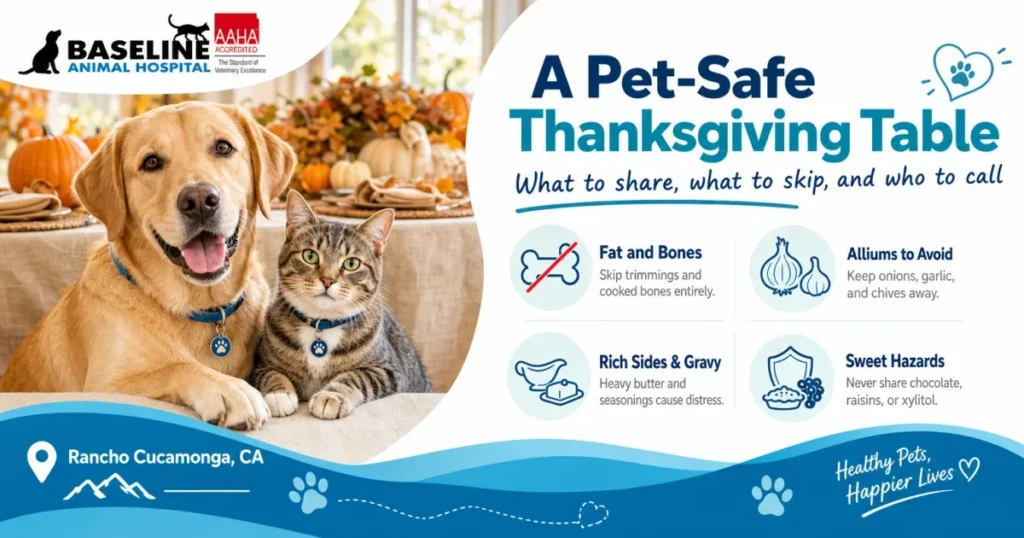
A Pet-Safe Thanksgiving Table: What to Share, What to Skip and Who to Call
Thanksgiving foods dogs can’t eat, plus what’s safe…
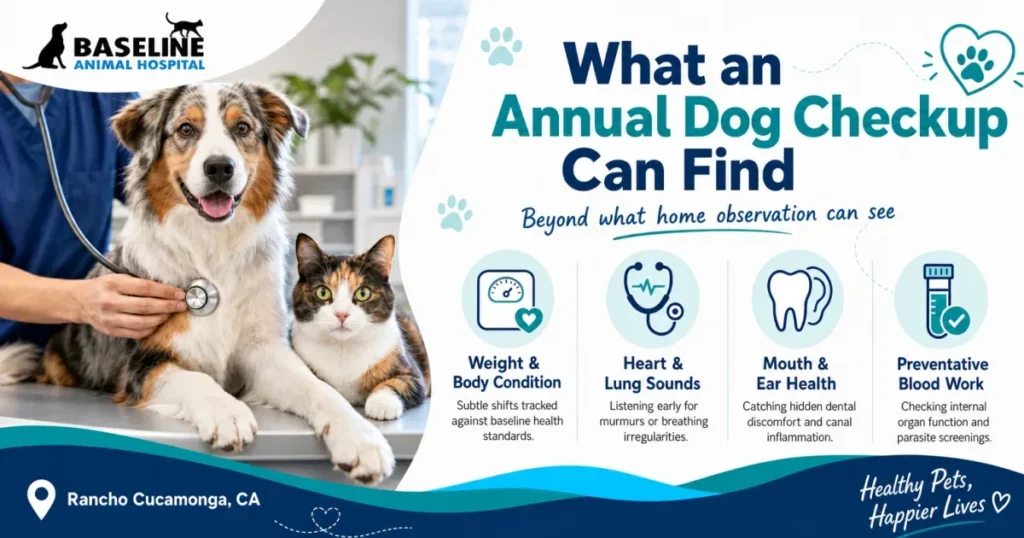
What a Yearly Checkup Can Find in a Healthy-Looking Dog
Wondering if your dog needs an annual dog…
Traveling for Thanksgiving with Your Pet: Car Trips, Health Certificates and Records
Traveling with pet health certificate this Thanksgiving? Get a checklist…
Dental Disease in Cats: Quiet Signs Owners Often Miss
Cat dental disease signs are easy for owners to miss.…
Holiday Guests and Open Doors: Keeping Dogs and Cats Safe from Slipping Out
Get a calm, simple pet escape holiday guests checklist for…