
Holiday Outings with Your Dog: A Calm Checklist for Crowded Events in Rancho Cucamonga
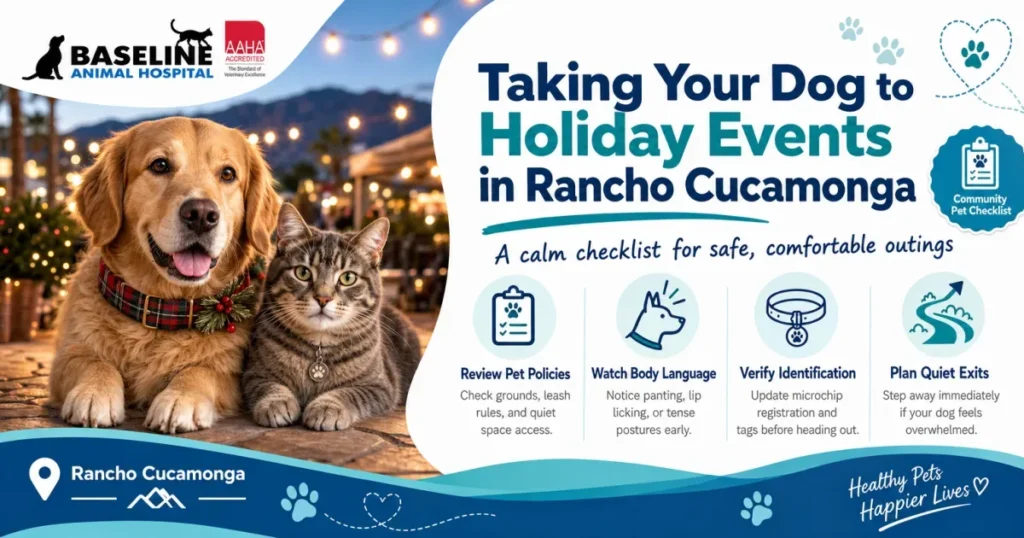
Holiday Outings with Your Dog: A Calm Checklist for Crowded Events in Rancho Cucamonga
Holiday lights, music and crowds can make a wonderful evening. They can also overwhelm a dog. Thinking about taking dog to holiday events Rancho Cucamonga hosts this season? It takes a little planning. The first question is whether your dog should come at all. We wrote this calm checklist to help you decide, pack and get home safely. It works for neighbors in Alta Loma, Ontario and Upland too. Every dog is different, so we tailor our advice to age, breed, health history and temperament. Then pick the steps that fit your dog and skip the rest.
First, Check Whether Dogs Are Welcome at the Event
Many holiday events focus on people, not pets. Rules vary by venue, vendor and night. So never assume dogs are welcome because a street or shopping center looks dog-friendly. Victoria Gardens, for example, lists holiday programming at Chaffey Town Square and North Main Street. That includes Santa photos and nightly light shows. We can’t tell you whether any single event allows dogs. Instead, check the pet policy before you plan around it.
Where to find the event’s pet policy
Start with the official source. Open the Victoria Gardens events page and look for a pet note on the event you want. Then check the organizer’s own website or social page. Market pages run by vendors often skip pet rules. Searches for dog friendly events Rancho Cucamonga return many lists, but listings can lag behind real rules. Individual shops may set their own policies too. While you’re there, confirm the date, time and location, because details can change. Some neighborhood light displays allow cars only, so don’t plan to walk a dog through them.
What to do if the policy is unclear
If you can’t find a clear answer, contact the organizer. Ask these questions:
– Can dogs come onto the grounds?
– Do leash, size or vaccine rules apply?
– Is there a quiet area away from the music?
If no one replies, leave your dog at home. Silence is not a yes. Some events do welcome pets, though. Victoria Gardens lists Pet Photos with Santa on select Mondays, for instance. Still, confirm the details with the center before you go.
Is This a Good Night for Your Dog?
Think about your own dog, not dogs in general. Bringing a dog to holiday events means strangers, strollers, loud music and long stretches of standing. Some dogs enjoy that. Others cope for ten minutes and then struggle. Before you decide, make sure your dog’s vaccinations are up to date. Your veterinarian can help determine which vaccines suit your dog’s age and lifestyle.
Signs of stress, in plain words
Dogs tell us how they feel with their bodies. So watch for these signs in the car and at the event:
– Panting when it isn’t warm, or drooling more than usual
– Yawning, lip licking or turning the head away
– A tucked tail, flat ears or a low, tense body
– Pulling toward the exit or hiding behind you
– Refusing treats they normally love
– Trembling, whining or barking that won’t settle
One sign alone may mean little. However, several together tell you your dog has had enough. Dog crowds and noise are the biggest challenge at night events, so give your dog a clear way out. Calm, loose and curious is the goal.
Try a practice run first. Play holiday music at low volume at home. Then walk your dog past a busy sidewalk in daylight. Notice how quickly your dog settles afterward. A dog who recovers within a minute or two is a better candidate than a dog who stays tense.
A quick yes, maybe or no table
Use this table as a starting point. Your veterinarian can help you place your dog, since recommendations may vary based on your pet’s age, breed, health history, lifestyle, and exam findings.
| Factor | Likely yes | Maybe | Likely no |
|---|---|---|---|
| Age | Healthy adult dog | Senior dog who tires easily | Puppy still finishing vaccines |
| Vaccines | Current, with records handy | Not sure, so check records first | Overdue or unknown |
| Temperament | Relaxed with strangers | Shy or very excitable | Fearful or reactive |
| Noise | Calm around music and doorbells | Startles but recovers fast | Panics at fireworks or thunder |
| Length of evening | Under an hour | One to two hours | A long, late night |
When staying home is the kinder choice
Staying home is not a failure. In fact, it is often the kinder choice. Consider leaving your dog behind if any of these fit:
– Fear, reactivity or sound sensitivity
– A puppy that has not finished vaccines
– Older age, sore joints or quick tiring
– Recovery from illness or surgery
– A long, packed event with loud music
Set up a quiet room with a chew, soft bedding and gentle background sound. Your dog will rest, and you’ll have peace of mind. Want exercise instead? Try a leashed walk on the Pacific Electric Trail, or visit the fenced off-leash area at The Bark at Central Park. Both may suit a dog who wants activity without a holiday crowd. Posted rules and city leash requirements apply, so check signs before you go.
The Calm Checklist for Taking Your Dog to Holiday Events in Rancho Cucamonga
If your dog is a yes or a maybe, pack these basics. Keep the list short and the visit shorter. Evening events add a few extra needs, too.
Leash, harness and ID tag
Use a fixed-length leash of about six feet. Skip retractable leashes in a crowd, because they give you less control. A snug, well-fitted harness can help stop a dog from slipping out. It gets dark early in winter, so a light-up leash or reflective harness also helps people see your dog. Add a collar with an ID tag that lists your name and a phone number you answer. Check that the tag is easy to read and the buckle holds. Do this at home, not at the gate. Some venues also set their own leash rules, so ask the organizer.
Water, waste bags and a rest spot
Pack these basics:
– Fresh water and a collapsible bowl
– Waste bags, plus a few extras
– A small mat or blanket for a rest spot
– Soft, small treats for rewards
– A towel for damp or dirty paws
Offer water often, even on cool nights. Then find a quiet edge of the crowd and let your dog settle there. Skip vendor food and table scraps, and watch for dropped snacks on the ground. Some holiday foods can upset a dog’s stomach or cause real harm.
Paws, pavement and a short visit
Winter evenings can chill pavement. Crowded walkways may also hold broken glass, salt or spills. Check your dog’s paws before and after the visit. Pick a short visit, such as 30 to 45 minutes, and arrive early before crowds build. Small or short-haired dogs may need a coat on cold nights. Meanwhile, senior dogs with stiff joints may tire sooner. Watch the clock, and watch your dog.
Your exit plan
Decide how you will leave before you arrive.
1. Arrive where you can leave quickly.
2. Pick a quiet spot to retreat to first.
3. Agree on a “we’re done” signal with your group.
4. Keep a second adult free to take your dog home.
5. Leave at the first signs of stress, not the tenth.
Leaving early is a win. Your dog learns that outings end well.
Why a Microchip Adds a Back-Up to the Tag
Crowds, noise and a sudden fright can make even a steady dog bolt. Collars can slip off, and tags can fall off. That’s why we see a microchip as a back-up, not a replacement. Pet microchipping at Baseline Animal Hospital adds a permanent layer of ID. It stays with your dog when the collar comes off. A dog ID tag and microchip work best as a pair.
What a microchip is and is not
A microchip is about the size of a grain of rice. We place it with a sterile syringe between the shoulder blades. Later, a scanner reads it using radio waves. A microchip is not a GPS tracker. It can’t show where your dog is right now. Instead, it holds an ID number that links to your contact details. Someone who finds your dog can take them to a local vet or shelter. Staff there can scan the chip and look for your details. Keep the collar and tag on too.
Keep the registration details current
After microchipping, you receive paperwork on how to register the chip. Please finish that step. An unregistered chip can’t connect a finder to you. Also update your details after a move or a new phone number. Check them at least once a year. Not sure whether you finished registration or your details are right? Call or text Baseline Animal Hospital at (909) 987-4788, and we will help you check.
Getting Home: Ears, Paws and a Quiet Room
Once you’re home, let your dog decompress. First, offer water and a quiet room with soft bedding. Also, skip visitors that night. Then check the basics:
– Ears: loud noise can leave some dogs sensitive, so watch for head shaking or pawing at the ears
– Paws: wipe them, then look between the toes for cuts, salt or burrs
– Body: feel for sore spots, then watch how your dog walks
– Mood and appetite: expect a tired dog, but look for normal interest in food and water
Noise can leave a dog wired or wiped out after a holiday outing. Both reactions are common for one night. Keep the next day calm, with short walks, regular meals and plenty of sleep. Most dogs bounce back after a night’s rest. Still, if something seems off after a day or two, a veterinary exam is the safest way to understand why. Book a routine wellness exam and tell us what you saw. We will tailor next steps to your dog.
When to Call Your Vet
Overall, most dogs just need rest after a big night. Still, call us if limping lasts, ear scratching continues, or your dog stays withdrawn or skips meals for a day. Call or text Baseline Animal Hospital at (909) 987-4788 during business hours. Then we will help you decide the next step. You can also call before the holidays begin. For example, we can talk through your dog’s age, health and temperament. Then we can suggest what outings may fit. In particular, that chat helps most for puppies, seniors and dogs with health conditions.
If your pet is in distress, seek veterinary help immediately.
Baseline handles emergencies during normal business hours only. Read how we handle emergencies during business hours on our website. Hours can change, so confirm them before you head over. Outside those hours, contact a local emergency veterinary hospital. Save its number in your phone before the outing, just in case.
Frequently Asked Questions
Is taking my dog to holiday events in Rancho Cucamonga a good idea?
It depends on the event and your dog. First confirm that dogs are welcome by checking the organizer’s pet policy. Then think about your dog’s age, temperament and comfort with crowds and noise. Fearful dogs, young puppies and seniors who tire easily often do better at home. Not sure where your dog fits? Call or text Baseline Animal Hospital at (909) 987-4788 and we will talk it through.
How can I tell if my dog is stressed in a crowd?
Look for panting when it isn’t warm, yawning, lip licking, a tucked tail, trembling or pulling toward the exit. One sign alone may mean little, but several together tell you to leave. Move to a quiet spot, offer water and head home if your dog does not settle. Want help reading your dog’s body language? Call or text us at (909) 987-4788, or ask at your next visit.
Does my dog need both an ID tag and a microchip?
Yes, both. A tag lets anyone who finds your dog call you right away. A microchip is a permanent back-up if the collar or tag falls off. It is not a GPS tracker and cannot show where your dog is. Keep your registration details current, too. Not sure your dog’s chip is set up correctly? Call or text Baseline Animal Hospital at (909) 987-4788.
What should I pack for a holiday outing with my dog?
Pack a fixed-length leash, a well-fitted harness, a collar with a current ID tag, fresh water, a bowl, waste bags and small treats. Add a mat for resting and a towel for paws. Bring a plan to leave early, too. Every dog is different, so tailor the list to your dog’s age, health and temperament. Have questions about your dog’s needs? Text or call us at (909) 987-4788.
What should I do if my dog slips away at an event?
Tell event staff right away and stay calm. Search nearby, then share a photo and your phone number with staff and security. Contact local shelters and vets in Rancho Cucamonga, Alta Loma, Ontario and Upland. Finders often take a found dog to a vet or shelter for a scan. Keep your chip registration current so a scan leads to you. Want to confirm your details today? Call or text us at (909) 987-4788.
Plan Your Next Outing with Baseline Animal Hospital
Taking your dog to holiday events in Rancho Cucamonga works best with a plan. Check the pet policy, read your dog’s signals and carry ID. Remember that every dog is different, and staying home can be the kindest choice. Before your next outing, check your dog’s microchip and contact info. Call or text us at (909) 987-4788, or book a visit when you’re ready. We’re here to partner with you on your dog’s wellness.
Check your dog’s microchip and contact info
Call or text Baseline Animal Hospital to confirm your details before the next outing.
This article is for general educational purposes and is not a diagnosis. A veterinary exam is the safest way to understand your dog’s health, temperament and readiness for crowded events. Recommendations may vary based on your dog’s age, breed, health history, lifestyle, and exam findings. Event rules, dates and hospital hours can change, so confirm them with the organizer and with Baseline before you go. If your pet is in distress, seek veterinary help immediately.


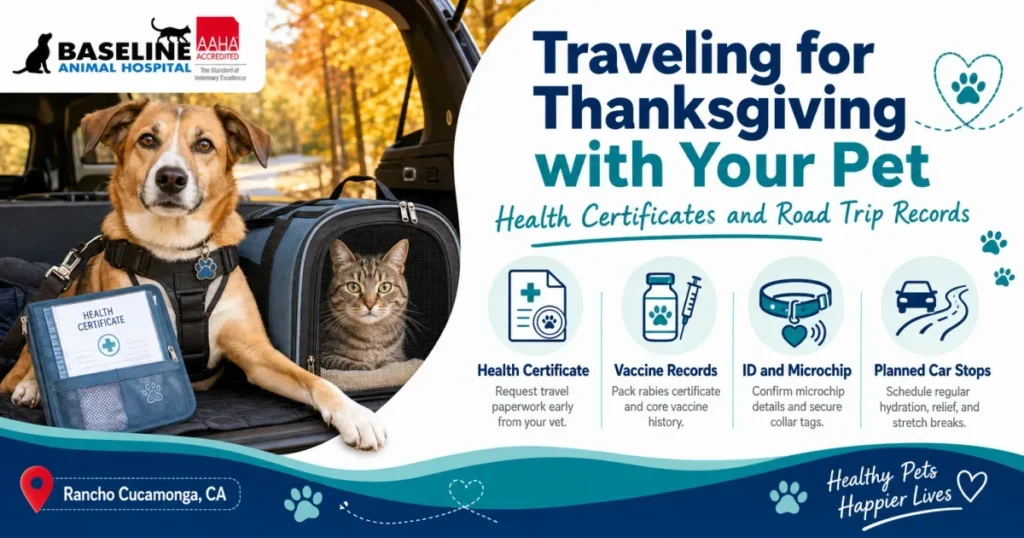
Traveling for Thanksgiving with Your Pet: Car Trips, Health Certificates and Records
Traveling with pet health certificate this Thanksgiving? Get…
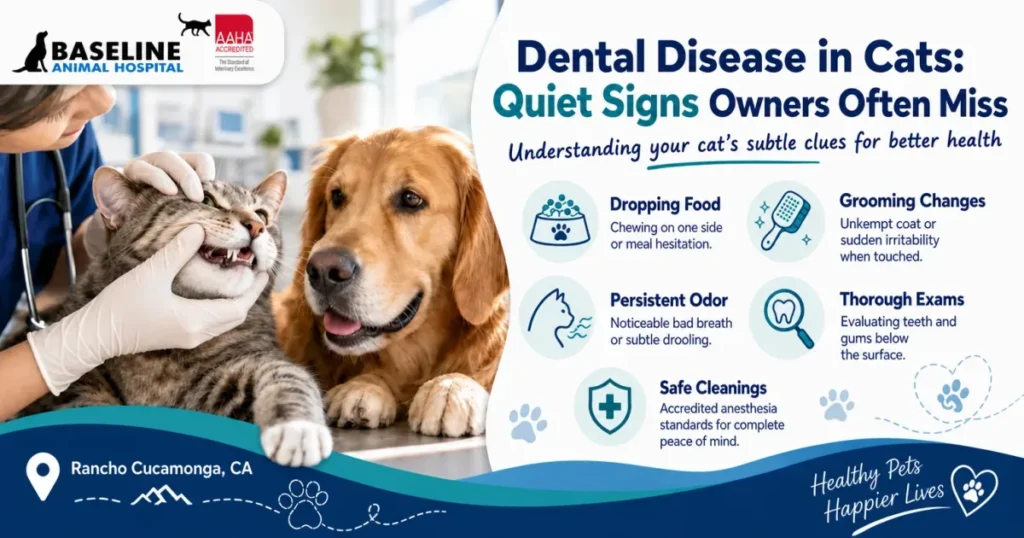
Dental Disease in Cats: Quiet Signs Owners Often Miss
Cat dental disease signs are easy for owners…
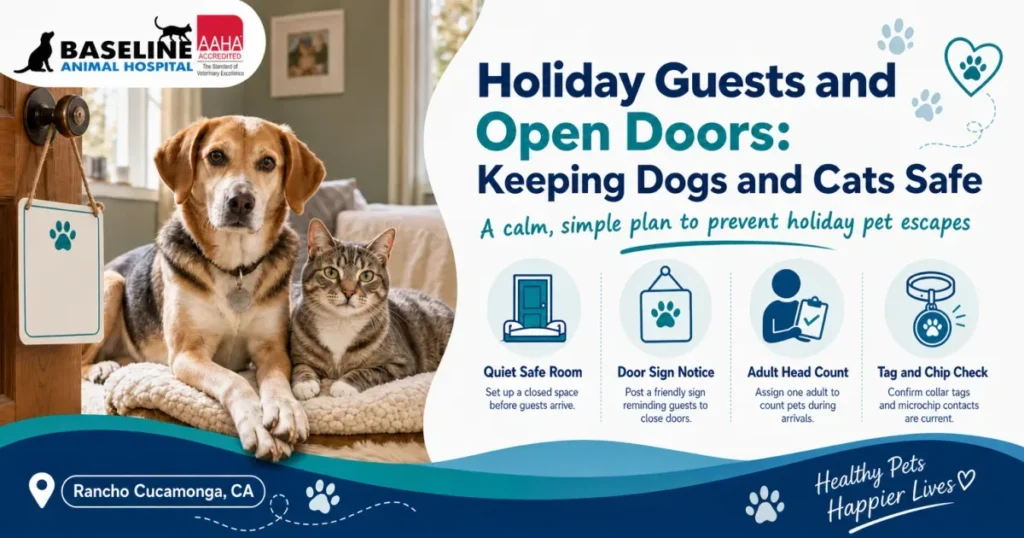
Holiday Guests and Open Doors: Keeping Dogs and Cats Safe from Slipping Out
Get a calm, simple pet escape holiday guests…
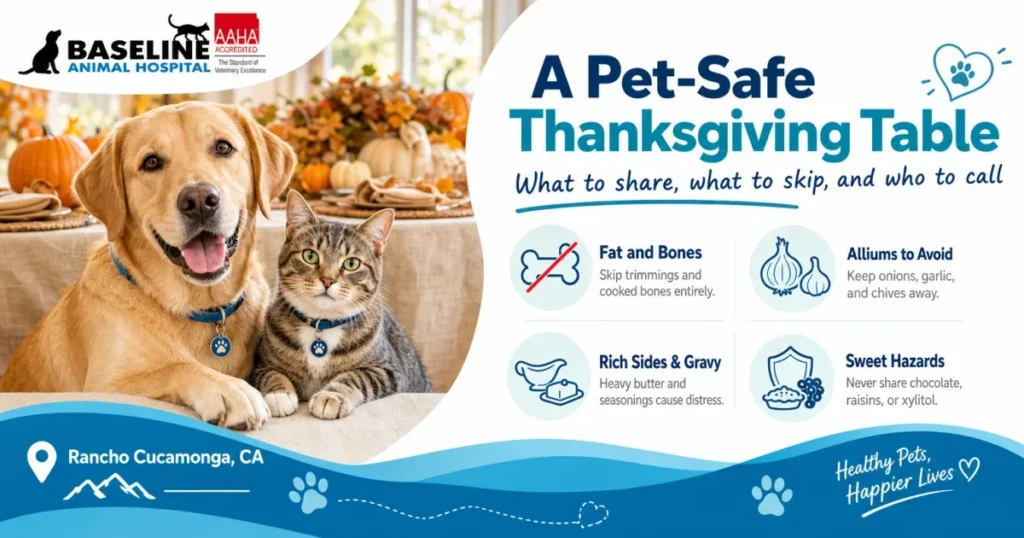
A Pet-Safe Thanksgiving Table: What to Share, What to Skip and Who to Call
Thanksgiving foods dogs can’t eat, plus what’s safe…
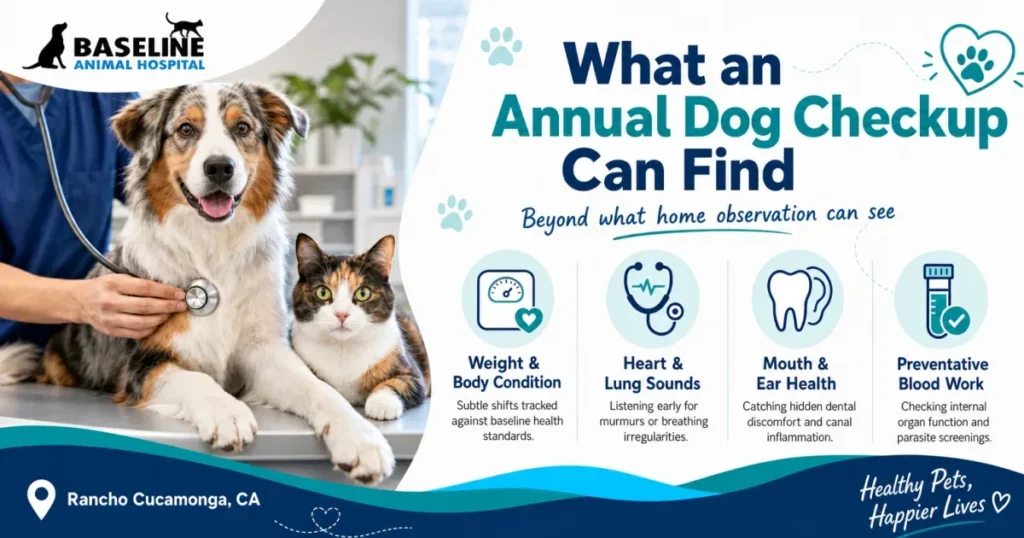
What a Yearly Checkup Can Find in a Healthy-Looking Dog
Wondering if your dog needs an annual dog…
Traveling for Thanksgiving with Your Pet: Car Trips, Health Certificates and Records
Traveling with pet health certificate this Thanksgiving? Get a checklist…
Dental Disease in Cats: Quiet Signs Owners Often Miss
Cat dental disease signs are easy for owners to miss.…
Holiday Guests and Open Doors: Keeping Dogs and Cats Safe from Slipping Out
Get a calm, simple pet escape holiday guests checklist for…