
Pet Surgery Prep: Questions to Ask Before Your Dog or Cat’s Procedure
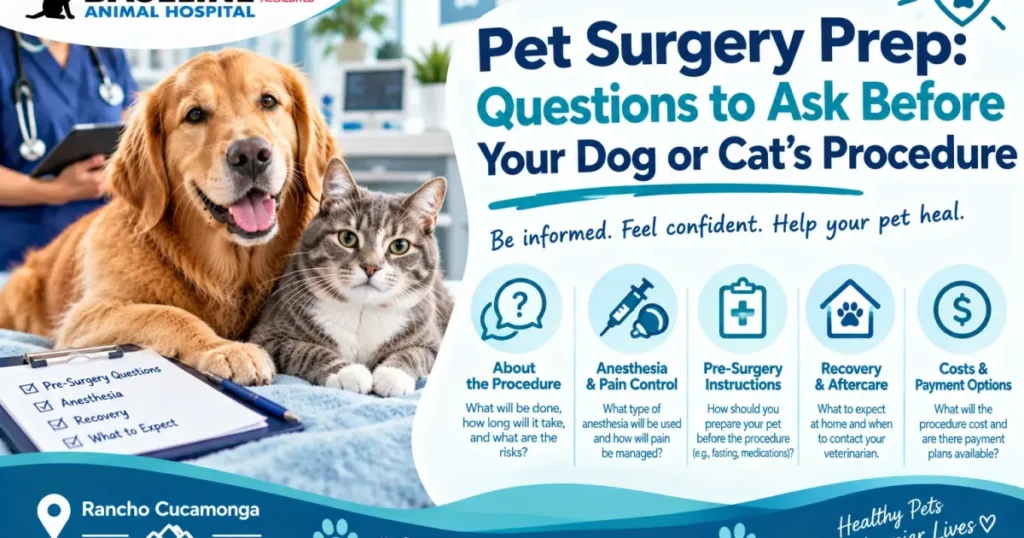
Pet Surgery Prep: Questions to Ask Before Your Dog or Cat’s Procedure
Why Questions Help Before Your Pet’s Procedure
Pet surgery preparation questions turn a worrying week into a clear plan. Many owners in Rancho Cucamonga, Alta Loma, Ontario, and Upland feel anxious about anesthesia, estimates, and aftercare. That feeling is normal. Asking questions is the best way to ease it.
We partner with you on every procedure, from spay and neuter to dental, soft tissue, and orthopedic care. Our team explains each step, so there are no surprises. Recommendations vary with your pet’s age, breed, health history, and exam findings. Use the questions below when you schedule a surgery consultation, and write down the answers.
This guide is general, and it does not replace an exam. Your veterinarian’s written instructions always come first.
Before Scheduling: Questions About the Procedure
Start with the big picture. These questions explain why surgery is on the table.
What Is the Diagnosis, and Why Is Surgery Recommended?
Ask your veterinarian to explain the diagnosis in plain words. Then ask what the surgery aims to achieve. Also ask how it may affect your pet’s quality of life, and what happens if you wait. Your vet can help determine the best timing.
What Will the Procedure Involve, and Are There Other Options?
Ask for a step-by-step walkthrough, including how long your pet will be under anesthesia. Then ask about other options, because some conditions respond to more than one kind of care. Our soft tissue surgeries include spay or neuter, mass removal, and bladder stone removal. Orthopedic care covers knee and hip repairs. For dental work, ask what cleaning and any extractions involve.
Who Will Perform the Surgery, and Is Your Pet’s Case a Fit for General Practice or a Referral?
Ask who will perform the surgery. Then ask how often that surgeon treats your pet’s condition. Next, ask whether your pet’s case fits general practice or needs a referral to a specialist. Some complex cases do. Your veterinarian can help determine the right fit, so ask for the reasons behind the answer.
How to Read an Estimate
A good estimate is clear and in writing. Ask for an itemized version, so you can see every line. A typical surgical estimate can include these items:
- The pre-anesthetic exam and bloodwork
- Anesthesia
- Trained monitoring during surgery
- Pain medication
- A recheck or suture removal
Next, ask what the estimate leaves out. Also ask who will call you if the surgeon finds something unexpected. We can walk through any estimate with you at a surgery consultation. For a deeper look, read our guide to spay surgery estimate questions. The same line-by-line approach works for other procedures, too.
Anesthesia and Monitoring Questions
Anesthesia causes the most worry, so it deserves clear answers. AAHA accredits our hospital, and its 2020 anesthesia guidelines describe anesthesia as a continuum from home to hospital and back. They cover four phases: pre-anesthesia, induction (going under), maintenance (staying under), and recovery (waking up). Use those phases to shape your pet surgery preparation questions about anesthesia.
Which Anesthesia Plan Fits My Pet’s Age, Breed, and Health?
No single plan fits every pet. A young, healthy cat and a senior dog need different approaches. Flat-faced breeds, for example, often need extra planning around breathing. Ask how the plan changes for your pet’s age, breed, and health history. Exam and lab results also help us choose our methods. If your dog is a senior, our post on senior dog dental anesthesia questions explains bloodwork, X-rays, and risk. Every anesthetic carries some risk, so also ask how the team works to reduce it.
Who Watches My Pet During and After Anesthesia, and With What Equipment?
Ask who monitors your pet from start to finish. At Baseline, a trained technician constantly monitors and adjusts temperature, IV fluids, and anesthesia during surgery. Then ask who stays with your pet during recovery, and what equipment tracks their progress. Staffing and overnight plans differ by procedure, so confirm yours before surgery day.
Pre-Surgical Bloodwork and Other Tests
Pre-surgical bloodwork shows what an exam cannot see. It also helps your vet tailor the anesthetic plan. A minor abnormal result does not always cancel surgery, but it may change the plan. Healthy pets benefit too, because their results create baseline values for later comparison. We run an in-house diagnostic lab. Your vet may suggest X-rays as well, depending on the procedure. Learn why vets recommend X-rays and bloodwork before treatment. Tests give information, not promises, so ask how the results will change the plan.
Pain Control and Comfort
Pain control belongs in every surgical plan. Ask how the team will keep your pet comfortable before, during, and after surgery. We design pain management strategies for your pet’s size, breed, and condition. AAHA’s pain guidelines also call for routine pain checks. Then ask what comfort looks like at home. Before you give your pet any medicine, ask your vet first.
Recovery and Aftercare Planning
Recovery starts before surgery day, so ask for the plan up front. Your pet surgery preparation questions should cover aftercare, too. At Baseline, every surgical patient goes home with recovery guidance and written discharge instructions. Our team walks through activity limits, incision care, the recovery collar, medications, and rechecks. For a closer look, read what normal spay and neuter recovery looks like.
Setting Up a Quiet Recovery Space at Home
Prepare a quiet space before surgery day. A calm room helps your pet rest. Use this checklist:
- Choose a low-traffic room, away from stairs and slippery floors.
- Lay out a clean, soft bed.
- Keep other pets and young children out of the room.
- Place fresh water nearby, and follow your vet’s feeding instructions.
- Add a litter box for your cat, and ask your vet about the best type.
Activity Limits, Incision Care, and Follow-Up Visits
Your vet sets activity limits for your pet’s procedure. Most plans limit running, jumping, and rough play for a period your vet names. For dogs, that usually means short, leashed potty breaks. Quiet streets around your Rancho Cucamonga neighborhood work well for those breaks. Skip walks, parks, and off-leash play unless your vet says otherwise. Check the incision as your instructions describe. Keep the recovery collar on, because licking can irritate the site. Then keep every recheck or suture removal visit.
Signs to Report to Your Veterinarian
Some changes are normal as your pet heals. Your discharge instructions describe typical appetite and energy. Call us during business hours if you notice any of these:
- Redness, swelling, or discharge at the incision
- A pet who refuses food or water longer than your instructions describe
- Vomiting or diarrhea that continues
- Low energy that does not improve
- A pet who licks or chews the incision despite the collar
If your pet struggles to breathe, collapses, bleeds heavily, or seems in severe distress, seek veterinary help immediately.
We handle emergencies during normal business hours only. Outside those hours, go to a local emergency veterinary hospital.
What to Bring on Surgery Day
A little planning makes drop-off smoother. Use these two checklists, and bring your list of pet surgery preparation questions.
Night-Before Checklist
Your vet’s written instructions rule here. Clinics set their own plans for food, water, and medications. Plans can also differ for puppies, kittens, and flat-faced breeds. Please do not rely on general rules, including online ones. If anything seems unclear, call us and ask.
- Read your written food and water instructions, and follow them exactly.
- Ask whether your pet should take regular medications that morning.
- Confirm your drop-off time and who will bring your pet in.
- Keep your phone charged, so the team can reach you.
- Pick up food bowls and treats if your vet asks you to.
Drop-Off Checklist
Use this table to pack your bag and plan your last questions.
| Item | Why it helps | Ask your vet |
|---|---|---|
| Written instructions and forms | Keeps details clear, so nothing slips through | Which forms should I finish before drop-off? |
| A reachable phone number | Lets the team call you during the day | Who will call with updates, and when? |
| A list of current medications | Helps the team know what your pet already takes | Should my pet take usual medicines that morning? |
| Vaccine and health records | Also gives the team your pet’s full history | Do you already have my records on file? |
| Collar, harness, and leash, or a secure carrier | Keeps your pet secure while you arrive | Should my pet wear a collar during the stay? |
| A small, familiar blanket | May help your pet feel calmer during the visit | Can my pet keep it with them? |
Quick Reference: Pet Surgery Preparation Questions to Print and Take With You
Print this table and bring it to your visit. Write the answers beside each question, so you can review them at home.
| Topic | Question to ask | Why it matters |
|---|---|---|
| Diagnosis | What is the diagnosis, and what is the goal of surgery? | Because clear goals help you decide with confidence |
| Procedure | What will happen, and what other options exist? | So you can compare your choices |
| Surgeon | Who will operate, and does my pet need a referral? | Since experience with the condition matters |
| Estimate | Can I have an itemized, written estimate? | Because line items help you avoid surprises |
| Anesthesia | Which plan fits my pet’s age, breed, and health? | Since every pet responds differently |
| Monitoring | Who watches my pet during each phase? | So you know someone watches at every stage |
| Testing | Which tests do you recommend, and why? | Because results help tailor the plan |
| Pain control | How will you keep my pet comfortable at home? | So comfort stays part of the plan |
| Recovery | What are the activity limits and recheck dates? | Because clear steps make aftercare easier |
| Warning signs | Which changes should I report, and whom do I call after hours? | So you know when to reach out |
No list covers every pet. Your veterinarian can add questions based on your pet’s exam findings.
Frequently Asked Questions
Why might bloodwork be recommended before surgery?
This is one of the most common pet surgery preparation questions. Pre-surgical bloodwork gives your veterinarian a fuller picture than an exam alone, so the team can tailor the anesthetic plan. Healthy young pets often have it too, because it creates baseline values for later comparison. A minor abnormal result does not always cancel surgery, but it may change the plan. Wondering which tests suit your pet? Call or text us at (909) 987-4788, and we will explain.
Is anesthesia safe for my pet?
No anesthetic is risk-free, and we never promise otherwise. Your veterinarian can help determine your pet’s individual risk after an exam and testing. Careful planning, trained monitoring, and clear aftercare all work to reduce that risk. Bring your pet surgery preparation questions about anesthesia to a consultation, and ask us to explain each phase. Prefer to talk first? Call Baseline at (909) 987-4788, or text your questions.
How long is recovery?
Recovery varies widely. A routine procedure usually needs a shorter healing period than an orthopedic repair, but every pet is different. We send every surgical patient home with written discharge instructions that cover activity limits, incision care, and rechecks. Add recovery timing to your pet surgery preparation questions. Not sure what to expect? Text or call us at (909) 987-4788, and we will walk through it.
Can I stay with my pet?
Policies vary by hospital and by procedure, so ask when you schedule. Many hospitals limit access to surgical areas, so owners usually say goodbye at drop-off. Add update calls and pickup timing to your pet surgery preparation questions. A familiar blanket may help your pet feel calmer. Curious about our process? Stop by or call us at (909) 987-4788.
What if my pet is older?
Age alone does not rule out surgery. Senior pets often benefit from a careful exam, bloodwork, and a tailored anesthetic plan. Your veterinarian can help determine how age, health history, and other conditions affect your pet’s plan. Ask about extra monitoring and a gentle recovery setup. Young puppies and kittens need individual planning too. Have an older pet at home? Call or text us at (909) 987-4788 to talk it over.
Schedule a Surgery Consultation at Baseline Animal Hospital
Clear communication matters before any procedure, and we welcome every question. Bring your pet surgery preparation questions to a consultation. We will answer them in plain words, tailor the plan to your dog or cat, and walk you through each step with compassion.
Whether you live in Rancho Cucamonga, Alta Loma, Ontario, or Upland, we are here to help you feel ready. Our goal is your peace of mind and your pet’s quality of life.
Call or text Baseline Animal Hospital at (909) 987-4788 to schedule a surgery consultation. Ask us for our current hours when you reach out.
Ready to talk through your pet’s procedure?
Our team will answer your questions and tailor a plan for your dog or cat.
We handle emergencies during normal business hours only. Outside those hours, contact a local emergency veterinary hospital.
This article is for general educational purposes and is not a diagnosis. A veterinary exam is the safest way to understand your pet’s needs before surgery. Recommendations may vary based on your pet’s age, breed, health history, lifestyle, and exam findings. Your veterinarian can help determine the right anesthesia, testing, and recovery plan for your dog or cat. If your pet is in distress, seek veterinary help immediately.


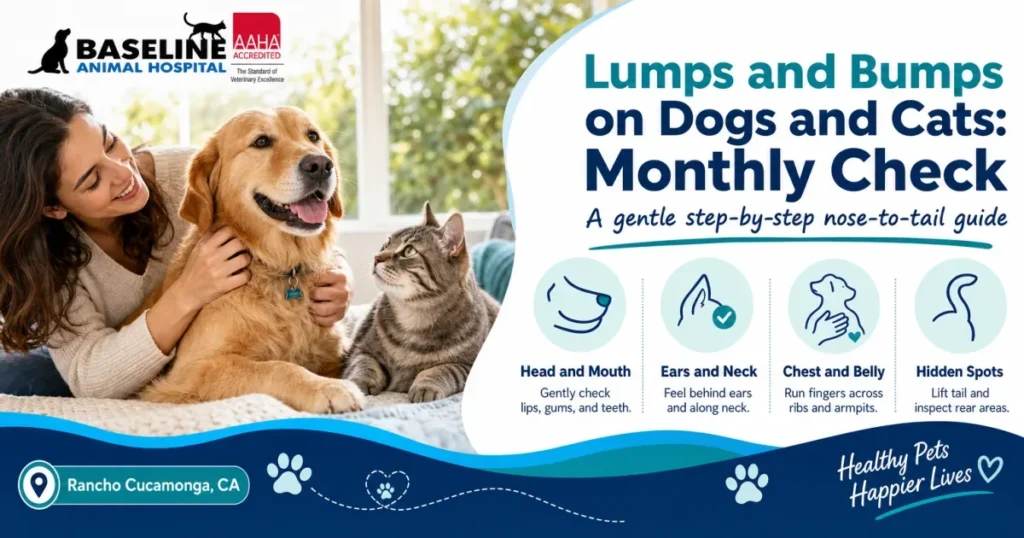
Lumps and Bumps on Dogs and Cats: A Monthly Home Check and When to Book an Exam
Lump on dog when to see vet? Learn…

Stress-free pet boarding and grooming in Rancho Cucamonga: A guide to peace of mind for pet parents
Call (909) 987-4788 to plan calm pet boarding…

Senior Dog Joint Stiffness: Managing Cold-Weather Arthritis in Rancho Cucamonga
Stiff mornings? Our senior dog arthritis Rancho Cucamonga…

Dog Ear Infections: When Head Shaking and Scratching Need a Vet Exam
A dog ear infection vet visit is the…

What to Tell the Veterinary Team When Your Pet Needs a Sick Visit
Your pet seems off, and you want help…
Lumps and Bumps on Dogs and Cats: A Monthly Home Check and When to Book an Exam
Lump on dog when to see vet? Learn a simple…
Stress-free pet boarding and grooming in Rancho Cucamonga: A guide to peace of mind for pet parents
Call (909) 987-4788 to plan calm pet boarding and grooming…
Senior Dog Joint Stiffness: Managing Cold-Weather Arthritis in Rancho Cucamonga
Stiff mornings? Our senior dog arthritis Rancho Cucamonga guide covers…