
Limping Dog in Rancho Cucamonga: When to Schedule an Exam

Limping Dog in Rancho Cucamonga: When to Schedule an Exam
A limping dog can worry any owner, especially when it starts suddenly. One day your dog trots down the Pacific Electric Trail without a care. Then the next day, one paw barely touches the ground. So, limping dog, when to vet?
Generally, schedule an exam when a limp lasts over a day or two, keeps returning, or follows an injury. However, if your dog will not put weight on a leg, seek veterinary help immediately. The same goes for a limb that looks bent or out of place, or for severe pain.
This guide explains why dogs limp and which signs call for a faster visit. It also covers what an exam may include, plus when X-rays or an orthopedic evaluation may come up. We wrote it for dog owners in Rancho Cucamonga, Alta Loma, Ontario, and nearby Inland Empire neighborhoods.
Emergency note: If your dog cannot put weight on a leg, seek veterinary help immediately. Do the same if the limb looks bent or out of place, or if your dog seems to be in severe pain. Baseline Animal Hospital handles pet emergencies during normal business hours only. Outside those hours, contact a local emergency veterinary hospital.
Why Dogs Limp
Limping means something hurts or does not work right in a leg, paw, joint, or even the back. Dogs cannot tell us where it hurts, so they show it in other ways. Instead, they favor the sore limb, shorten their stride, or bob their head as they walk.
Several broad groups of problems can cause a limp:
- Soft tissue injuries: a strain, sprain, or pulled muscle can follow a hard run or an awkward jump.
- Paw and nail problems: a cut pad, a torn nail, or a stuck object between the toes can also make a dog favor one paw.
- Joint conditions: arthritis, hip dysplasia, a slipping kneecap (patella luxation), and ligament injuries such as a cranial cruciate ligament (ACL) tear can also cause lameness.
- Bone injuries: a fall, a collision, or a bad landing can crack or break a bone.
- Other causes: stings, infections, and growths can also lead to limping, and some causes start outside the leg.
Because so many causes look alike at home, guessing is risky. A veterinary exam is the safest way to understand what is behind your dog’s limp. Your veterinarian can also help determine whether the cause is minor or calls for treatment right away.
Signs to Call Sooner
Some limps can wait for a scheduled visit, but others cannot. Watch for the signs below, and call us sooner if you see them. However, when a sign is severe, seek veterinary help immediately.
Non-Weight-Bearing Limping
If your dog holds a leg off the ground, or touches down for only a moment, treat it as urgent. Because this often points to significant pain, seek veterinary help immediately. Do not wait until it improves.
Swelling, Heat, or a Visible Wound
Look at the leg and paw, but do not force your dog to move. Swelling, warmth, redness, bleeding, or an open wound all call for a prompt exam. A small wound can also hide a deeper injury, so even minor ones deserve a look.
Pain or Crying Out
Yelping, flinching, or growling when you touch the leg can also signal pain. So can panting or trembling while your dog rests. Dogs often hide discomfort, so a quiet dog may still hurt.
Injury or Trauma
A fall, a collision, a hard landing, or a scuffle with another dog all deserve an exam. Some injuries look mild at first, but they can still be serious. Your dog may even walk better after a few minutes, yet the injury can remain.
Worsening or Returning Limps
A limp that gets worse, lasts more than a day or two, or returns after rest needs an exam. Stiffness after naps, trouble with stairs, and reluctance to jump matter too. Likewise, limping with low energy, a poor appetite, or fever calls for a prompt phone call.
Limping Dog: When to Vet at a Glance
Use this table as a quick guide, but remember that it does not replace an exam. Recommendations may vary based on your dog’s age, breed, health history, lifestyle, and exam findings.
| What you notice | Suggested next step |
|---|---|
| No weight on the leg, a limb that looks bent or out of place, or severe pain | Seek veterinary help immediately |
| Swelling, heat, bleeding, or a wound | Call us during business hours for a prompt exam |
| Limping after a fall, collision, or rough play | Schedule an exam promptly, since some injuries look mild at first |
| Limping that lasts more than a day or two | Schedule an exam |
| Limping that comes and goes, or stiffness after rest | Schedule an exam |
| Limping with low energy, poor appetite, or fever | Call us during business hours for guidance |
What an Exam May Include
A limping exam usually starts with questions. Your veterinarian will ask when the limp began, which leg it affects, and whether it changes with activity. Then comes a hands-on exam and a look at how your dog walks.
An exam may include:
- History: questions about recent activity, past injuries, medications, and supplements.
- Gait watch: your veterinarian may watch your dog walk or trot, while noting how weight shifts between legs.
- Hands-on exam: gentle feeling of the paw, leg, joints, and spine to find sore spots, swelling, or loose joints.
- Range of motion: careful bending of the joints to check for pain or stiffness.
- Next-step discussion: then, based on the findings, your veterinarian may suggest imaging, other tests, or a treatment plan.
Dogs often act differently at the clinic. Some hide the limp, while others tense up. As a result, a short phone video from home can help.
How to Prepare for the Visit
A little preparation also makes the exam more useful. Before you come in, gather these items:
- When the limp started and which leg it affects
- Whether it is worse after rest, after exercise, or at certain times of day
- Any recent fall, rough play, new activity, or long outing
- A short phone video of your dog walking on a flat surface
- A list of medications, supplements, and flea or tick products your dog takes
- Records from any previous veterinarian
New to our hospital? Ask the team how to send over past records. That step also helps your veterinarian see the full picture.
When X-Rays or Orthopedic Evaluation May Be Discussed
Afterward, your veterinarian may talk with you about imaging or an orthopedic evaluation. Neither one is automatic. Instead, exam findings and your dog’s history guide the plan.
X-Rays and Other Imaging
X-rays, also called radiographs, show bones and joints. They can help check for broken bones, swollen joints, and other bone changes. Our pet radiology service includes digital X-rays and ultrasound. Also, if an exam calls for more detail, we can schedule a CT scan at our hospital.
Some limping dogs need sedation or calming medication to hold still for clear images. This is especially true when a leg is sore. Your veterinarian will explain whether that applies to your dog.
Imaging results then guide the next conversation. Depending on the findings, the plan may range from monitoring and medication to rehabilitation or surgery.
Orthopedic Evaluation and Referral Questions
An orthopedic evaluation focuses on bones, joints, and ligaments. Your veterinarian may suggest one if the exam or X-rays point to a fracture, a ligament injury, a kneecap that slips out of place, or a hip problem. Our orthopedic surgery page also lists fracture repair, ACL surgery (including TPLO, TTA, and lateral suture techniques), patella luxation correction, and hip dysplasia care.
Many owners also worry about finding a trusted surgeon. If surgery comes up, ask us which procedures we perform here and whether your dog’s case may call for a referral. Your veterinarian can help determine what fits your dog’s age, size, and lifestyle.
Limping After an Active Day Out
Rancho Cucamonga dogs enjoy a lot of outdoor time. A walk on the Pacific Electric Trail, a play session at The Bark at Central Park, or a weekend outing near the San Gabriel foothills can fill a happy day. Still, a limp that follows a big day out deserves the same attention as any other limp.
Check the signs above first. Then schedule an exam if the limp lingers, returns, or leaves you unsure. Afterward, ask your veterinarian how to ease your dog back into activity.
What to Avoid While You Arrange the Visit
- Pain medicine: do not give human pain medicine, because many human medicines are unsafe for dogs.
- Activity: do not push a sore dog to run, jump, or climb stairs, and ask your veterinarian how much activity is safe until the exam.
- Red-flag signs: do not wait them out. Instead, seek veterinary help immediately.
- Mood: do not assume a happy dog feels fine, because dogs often hide pain, even when they wag and eat.
Frequently Asked Questions
Should I rest my dog or schedule an exam?
Resting at home may feel like the safe choice, but it can hide a problem that needs care. If your dog limps for more than a day or two, or shows any red-flag sign above, an exam is the safest next step. Your veterinarian can also help determine how much activity is appropriate. Still not sure which category your dog fits? Call or text us at (909) 987-4788 and describe what you see.
How long can a limping dog wait before seeing a vet?
The answer depends on the signs, so look closely at how your dog moves. If your dog will not use a leg, seek veterinary help immediately. However, for a milder limp, plan an exam when it lasts more than a day or two, gets worse, or keeps returning. Want help judging the timing? Call or text us at (909) 987-4788, and our team can help you decide when to come in.
Can a limp go away on its own and still need an exam?
Yes. A limp can ease with rest while the cause remains. Joint and ligament problems can come and go, so a limp that returns deserves a closer look. Then your veterinarian can examine the leg and explain what the findings mean. Has the limp already faded? Call or text us at (909) 987-4788 and ask whether an exam makes sense.
Does a limping dog always need X-rays?
No. Many visits begin with a history and hands-on exam, and then your veterinarian decides whether imaging adds useful information. X-rays often come up when a limp is severe, lingers, follows an injury, or points to a bone or joint problem. Recommendations may vary based on your dog’s age, breed, and exam findings. Curious about imaging? Call or text us at (909) 987-4788 and ask how our X-rays and ultrasound work.
What should I do if my dog limps badly after hours?
If your dog will not bear weight, has a deformed limb, or seems to be in severe pain, seek veterinary help immediately. We handle pet emergencies during normal business hours only, so contact a local emergency veterinary hospital outside those hours. For a milder limp, call or text us at (909) 987-4788 during business hours to book an exam.
Schedule an Exam for Your Limping Dog in Rancho Cucamonga
So, limping dog, when to vet? Seek veterinary help immediately if your dog will not bear weight, has a deformed limb, or is in severe pain. Otherwise, schedule an exam promptly for swelling, trauma, or a limp that lasts, worsens, or returns. Your veterinarian can then help determine the cause and the next step.
We care for dogs and cats from Rancho Cucamonga, Alta Loma, Ontario, and nearby Inland Empire communities. Ready to schedule an exam? Call or text Baseline Animal Hospital at (909) 987-4788, or book an appointment online. Then our veterinary team can take a careful look at your dog’s leg and talk through next steps.
If your pet is in distress, seek veterinary help immediately.


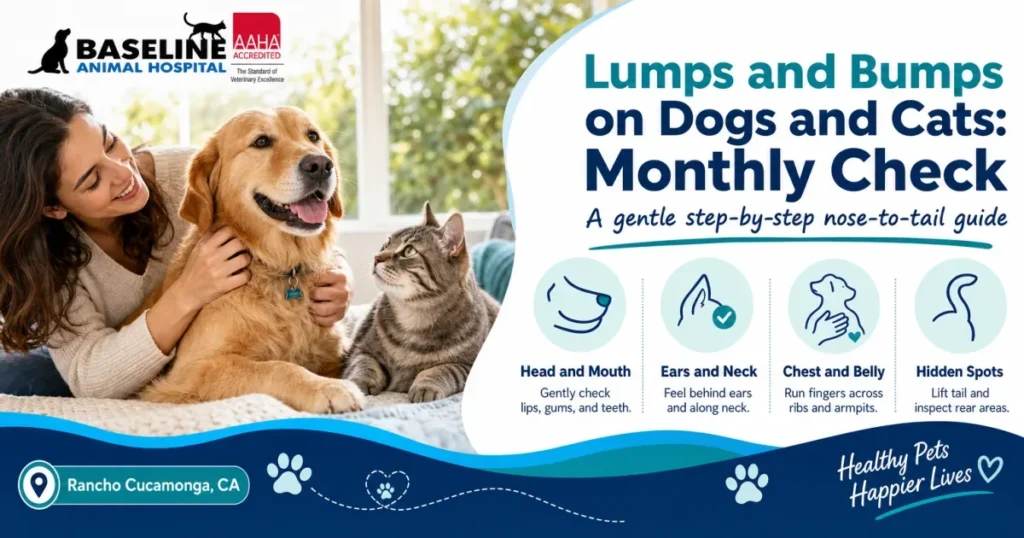
Lumps and Bumps on Dogs and Cats: A Monthly Home Check and When to Book an Exam
Lump on dog when to see vet? Learn…
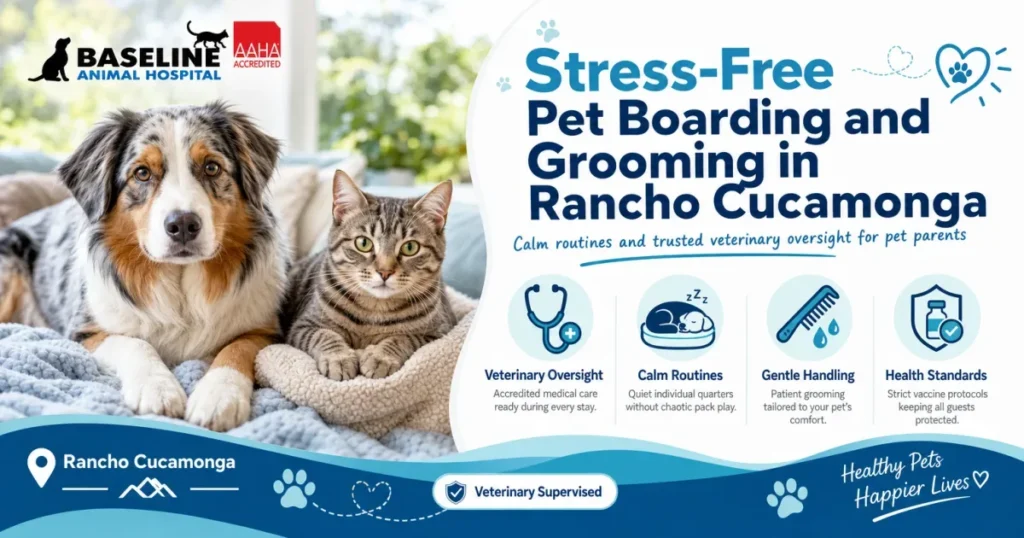
Stress-free pet boarding and grooming in Rancho Cucamonga: A guide to peace of mind for pet parents
Call (909) 987-4788 to plan calm pet boarding…
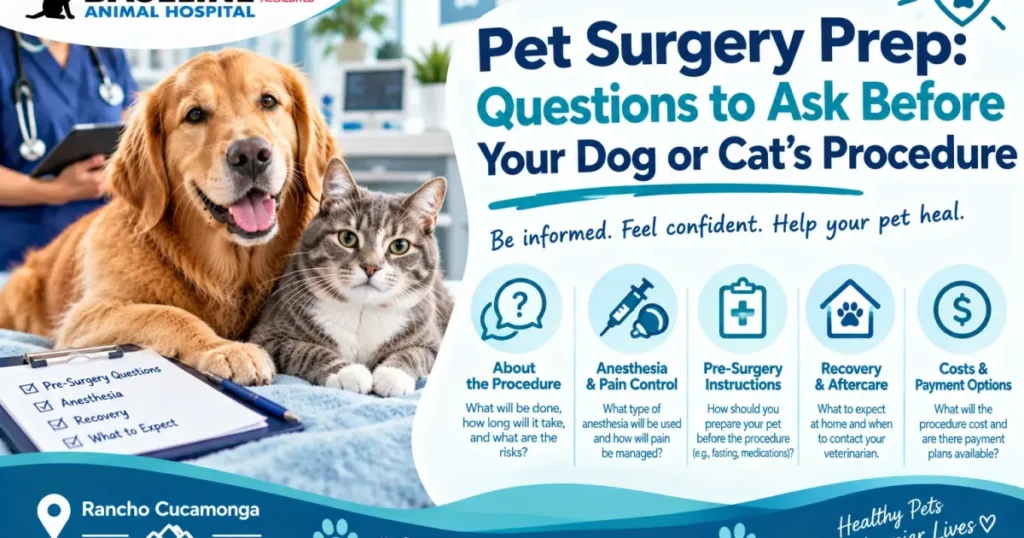
Pet Surgery Prep: Questions to Ask Before Your Dog or Cat’s Procedure
Use these pet surgery preparation questions before your…

Senior Dog Joint Stiffness: Managing Cold-Weather Arthritis in Rancho Cucamonga
Stiff mornings? Our senior dog arthritis Rancho Cucamonga…

Dog Ear Infections: When Head Shaking and Scratching Need a Vet Exam
A dog ear infection vet visit is the…
Lumps and Bumps on Dogs and Cats: A Monthly Home Check and When to Book an Exam
Lump on dog when to see vet? Learn a simple…
Stress-free pet boarding and grooming in Rancho Cucamonga: A guide to peace of mind for pet parents
Call (909) 987-4788 to plan calm pet boarding and grooming…
Pet Surgery Prep: Questions to Ask Before Your Dog or Cat’s Procedure
Use these pet surgery preparation questions before your dog or…